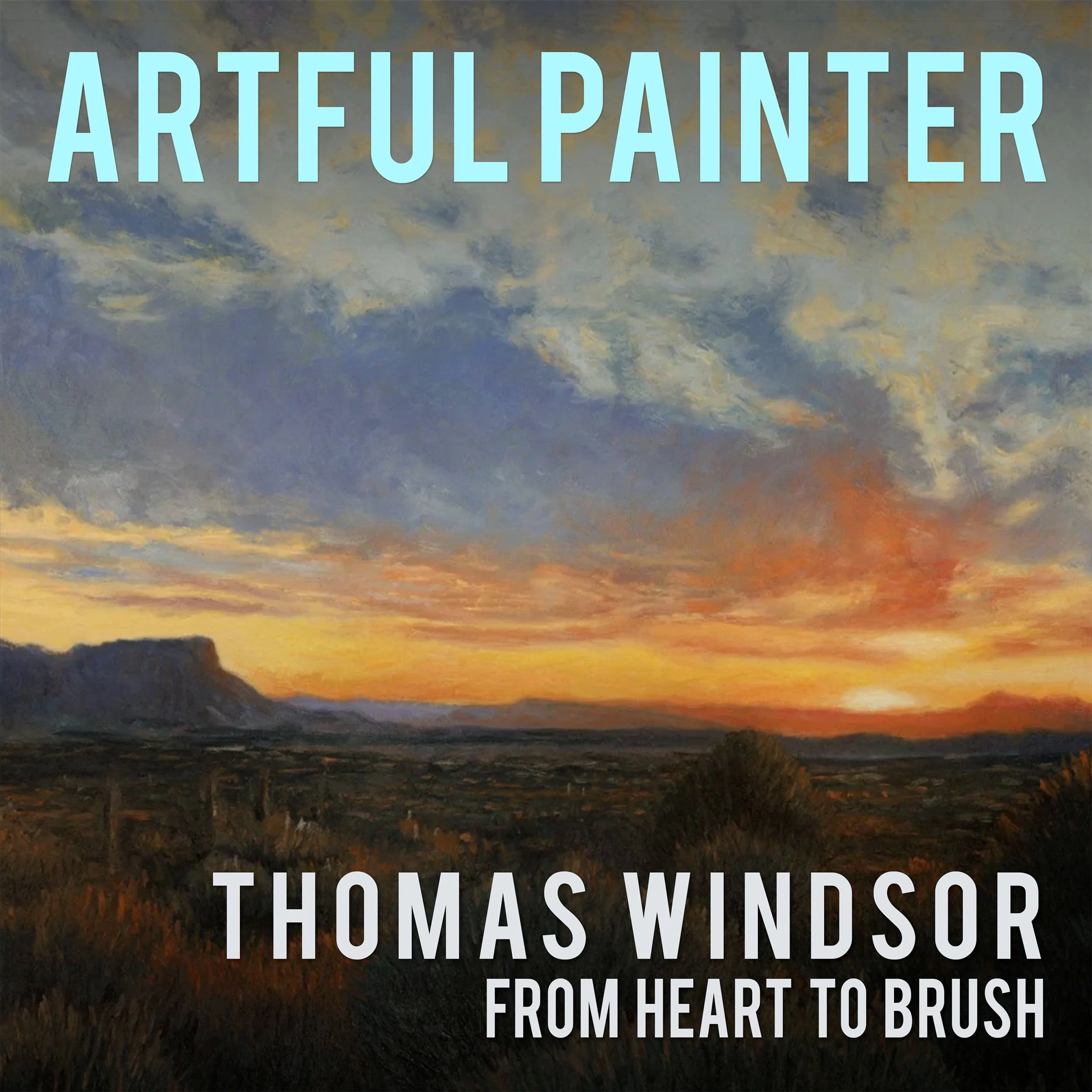
From Heart to Brush
Episode 78
Episode length: 1 hour and 3 minutes
Doom scrolling on YouTube may usually be a waste of time but occasionally you stumble across a real, hidden gem. That happened to me a few weeks ago. I like watching YouTube videos about art and art history (and, truthfully, many other subjects). You know the way YouTube works - it takes your watch history and tries to predict other videos you might want to watch. YouTube wants you to keep watching videos - forever would be ideal for them. This was the case with my guest in this episode of The Artful Painter.
YouTube suggested to me a video on a channel called Painting Therapy, by artist and cinematographer Thomas Windsor. That expression - painting therapy - hooked me. I clicked, and I watched, and I watched, and I watched. YouTube’s algorithm was happy, and I was enthralled by what I saw and heard as Thomas painted on camera. The binge has started and I kept watching and listening to Thomas. At one point, I left one of his videos playing as I worked on a large painting. I could not see what he was doing so I just listened to him talking in the background. I usually find it highly distracting to paint with words sounding off in the background. The words through me off so it’s something I rarely ever do. I can’t listen to podcasts while I paint, nor can I listen to songs with vocals. It’s weird I know - but that’s just me. But Thomas was an exception to the rule.
After this experience, I knew I had to have Thomas Windsor on the podcast. I reached out to him and he graciously accepted. So, I’m happy to share with you our conversation in this edition of The Artful Painter. Wow! I learned a lot about Thomas in this conversation. Turns out, his day job is running a film production company. He is a cinematographer and produces commercial videos. Painting is a side-calling, but a very important one to Thomas.
To whet your appetite, here are a few things we talk about:
Thomas Windsor’s background in filmmaking and commercial production
Growing up in a strict household with limited media exposure
Committing to “a painting a week”
Why Thomas intentionally avoided formal art training
Painting as self-education and self-discovery
The connection between filmmaking and painting
Why painting feels more personal and vulnerable than filmmaking
The difference between technical perfection and emotional authenticity
The influence of Vincent van Gogh on Thomas’s thinking about art and emotion
Creativity as a direct emotional expression rather than a technical exercise
The dangers of overthinking and perfectionism
“Painting Therapy” and art as emotional regulation
Depression, sensitivity, and the search for meaning
Observing everyday beauty and “being an artist” in daily life
The importance of presence, attention, and wonder
That’s a lot to process in about an hour, but, shazaam! What an hour it was for me to converse with Thomas. I hope you enjoy this episode.
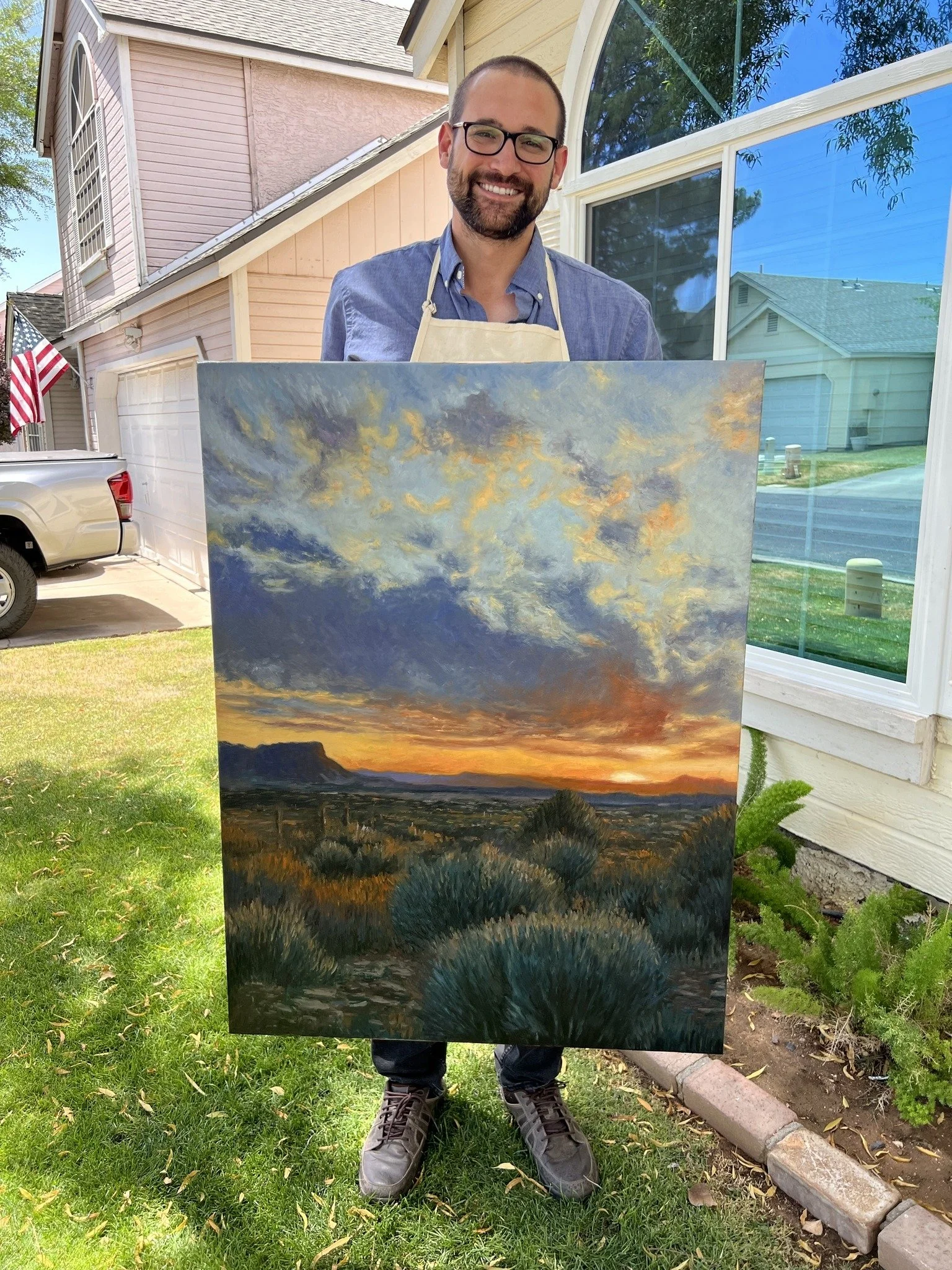
Thomas Windsor - Cinematographer and Fine Art Painter
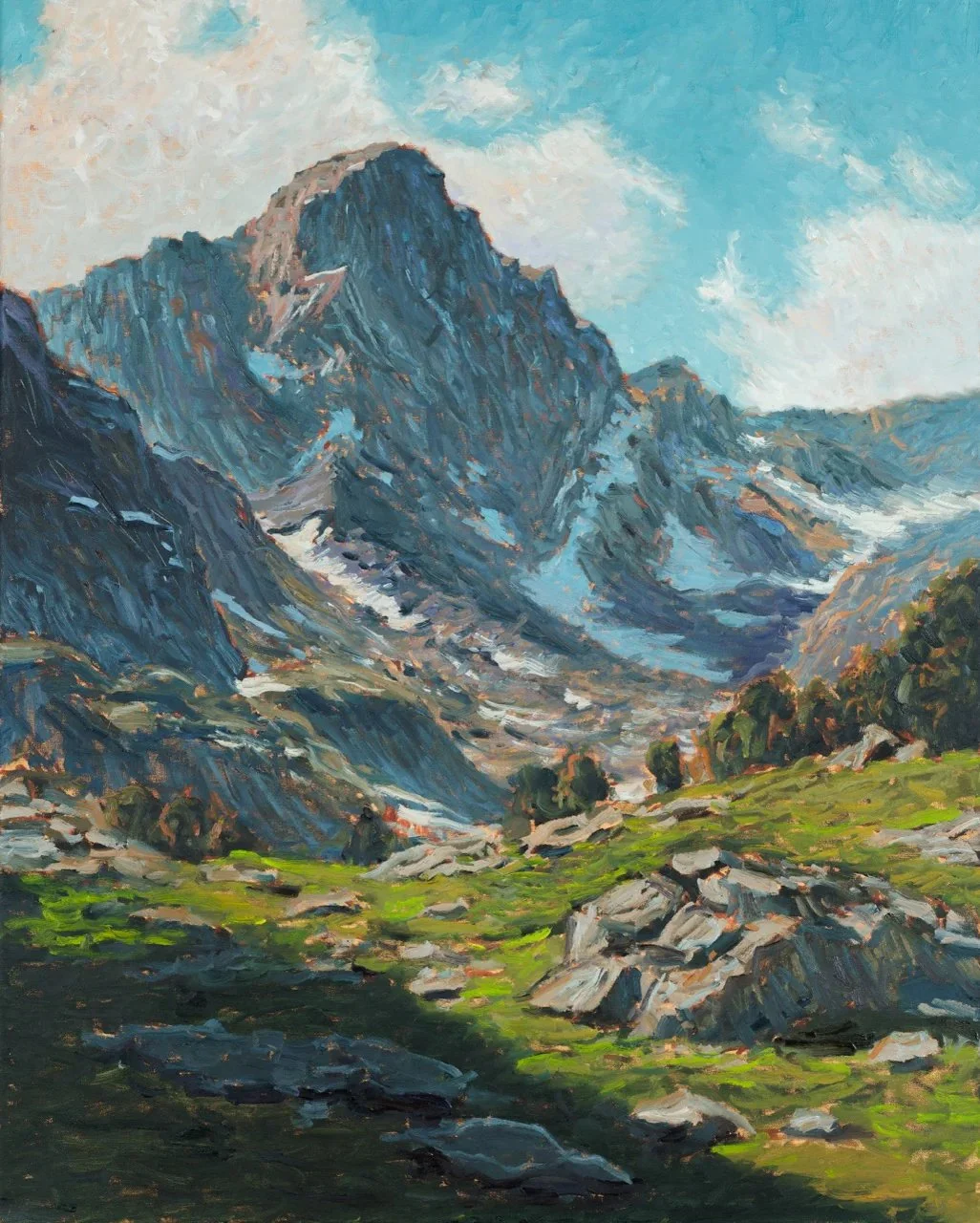
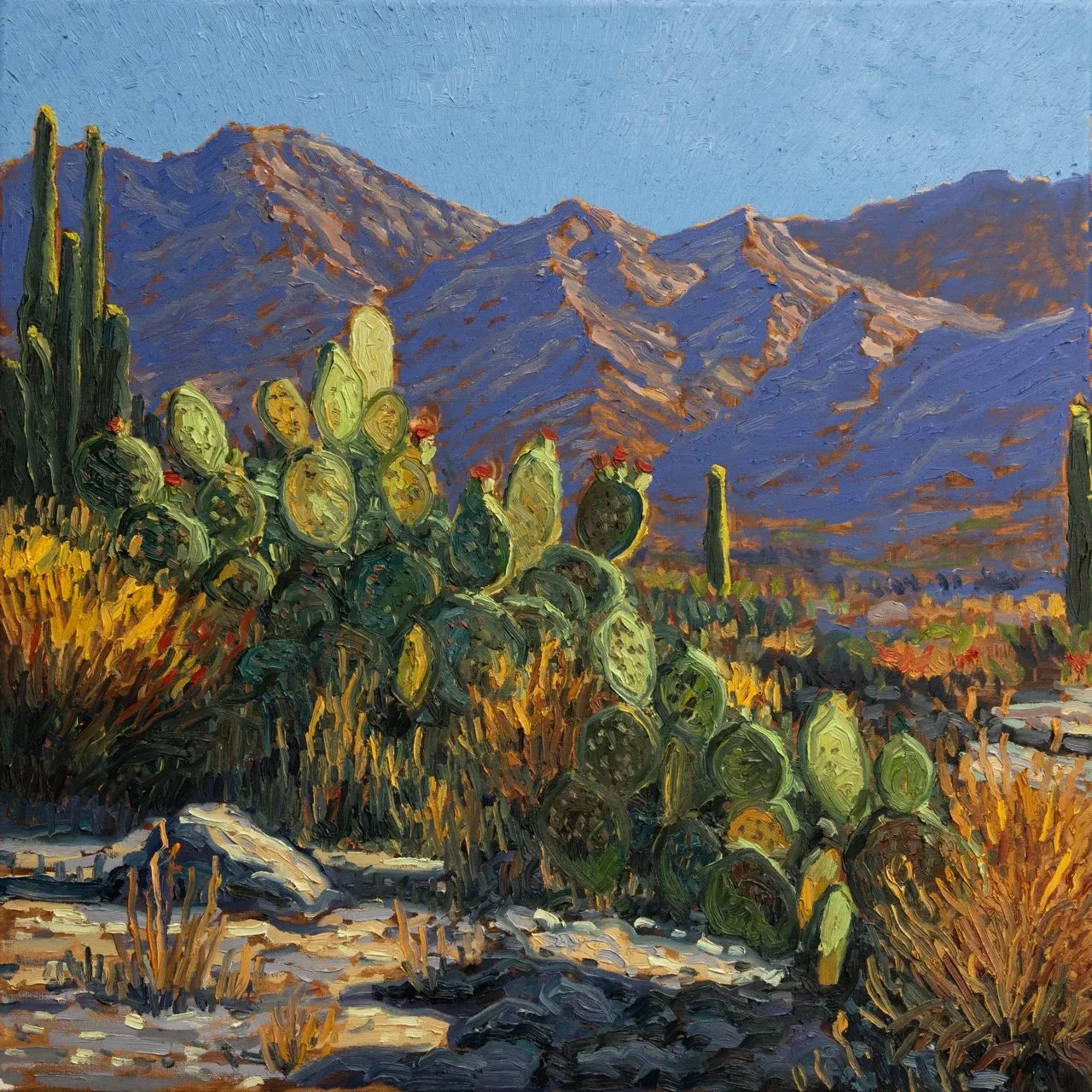
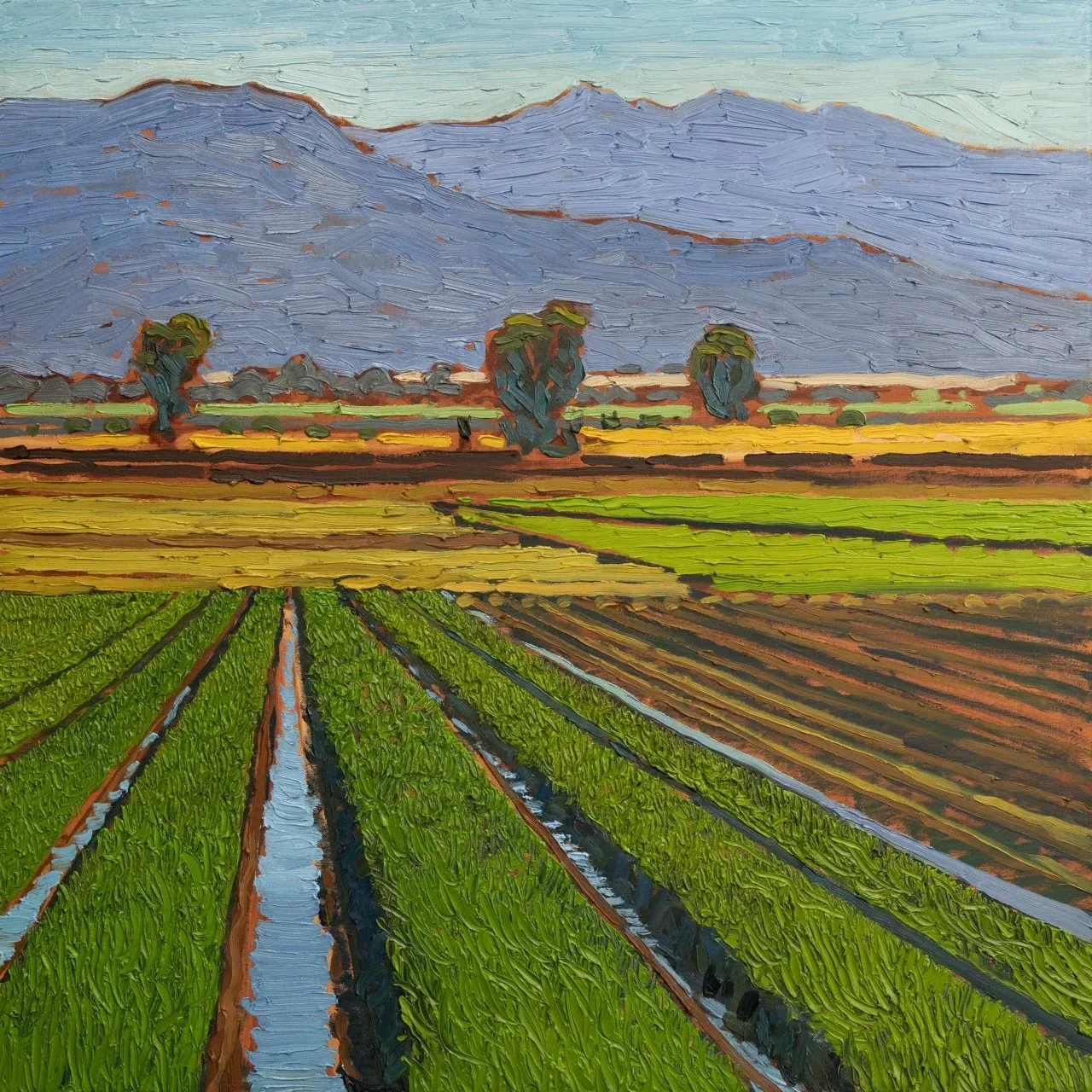
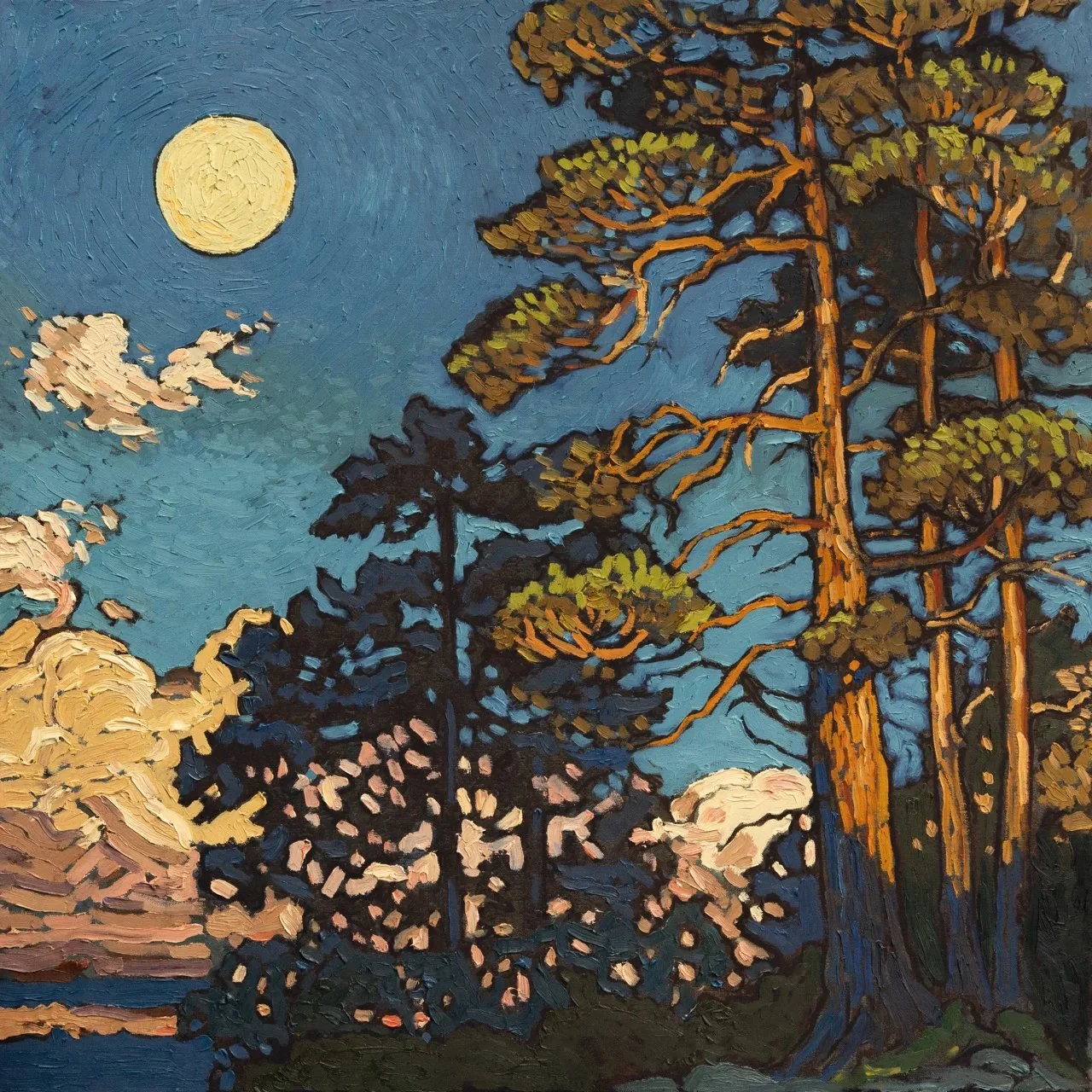
Click on the images above for a larger view.
Links
Thomas Windsor
Website: https://thomaswindsorstudio.com/
Film Production Website: https://epiclightmedia.com/
Instagram: https://www.instagram.com/thomaswindsorstudio/
Facebook: https://www.facebook.com/thomaswindsorstudio/
Painting Therapy channel on YouTube: https://www.youtube.com/@Thomas_Windsor
Epic Light Media channel on YouTube: https://www.youtube.com/c/EpicLightMedia
Other Links
Vincent Laforet Website: https://www.vincentlaforet.com/
Vincent Laforet on YouTube: https://www.youtube.com/channel/UCaGfb_6taciyILmlJFxecvA
Philip Bloom Website: https://philipbloom.net/
Philip Bloom on YouTube: https://www.youtube.com/user/philipbloom
Rodney Charters: https://www.imdb.com/name/nm0153552/
Available on:
Apple Podcasts
Amazon Music
Spotify
YouTube
Transcript
A Note About This Transcript
This transcript has been edited for clarity. I’ve endeavored to capture the thoughts and expressions of my guest as accurately and truthfully as possible. In some cases this means completing incomplete thoughts, removing stammers and word fillers such as um, like, you know, and so forth. I’ve edited the transcript to make it easier to read. Please pardon the inevitable errors that I may have made or overlooked.
Carl Olson: When you record your YouTube videos, what are you using to record that with?
Thomas Windsor: It's a long story. I ended up buying my own cameras, even though we have our own [Epic Light Media] here at the studio: Blackmagic Pocket 6K’s. Their color science - I'm in love with their color.
Carl Olson: I have an old Canon 5D Mark II that I use sometimes in the studio.
Thomas Windsor: That's great. That camera was the thing that changed my life forever. That was a big deal.
Carl Olson: Did you get it back when it first came out?
Thomas Windsor: Yeah, right, pretty soon after it first came out. I was like one of the only people filming stuff that looked like a movie.
Carl Olson: Vincent Laforet, remember him?
Thomas Windsor: Yes, I went to one of his workshops. I became obsessed with him. I learned from him.
Carl Olson: I met Vincent Laforet at NAB many years ago. I also knew Philip Bloom. He was very influential.
Thomas Windsor: I watched every video he made, every single one, for years.
Carl Olson: He was good. He is good. I shouldn't say was.
Thomas Windsor: You know the difference? This is the difference. The cameras have gotten so good now that they all just look so similar. So you don't blow people away anymore with their image, they all look good. Back then, Philip Bloom, it's like, wow, that camera, the A7S III or whatever, you know, looked incredible.
Carl Olson: I did a podcast originally called The Digital Convergence. And then I renamed it to The Artful Camera. And that's how The Artful Painter came about because I had lost interest in talking about camera gear and techniques. I liked art and so I started painting and I figured, well, this is a good way to learn things [by doing a podcast].
Thomas, I am so happy you're joining us here on The Artful Painter.
You are one of those happy accidents for me. One day, going through YouTube, doom scrolling, looking for a video, here comes Thomas Windsor. And I watched the entire video. I said, “Man, this is great!” So thank you for joining me here and humoring me for a little bit.
Thomas Windsor: I’m glad to be here. I'm excited.
Carl Olson: You're a filmmaker. I take it that's your primary way of making a living.
Thomas Windsor: So yeah, if I was going back far enough... at first I was cleaning pools, swimming pools. I got married young and needed to make more money. And I was going to college. Then I met someone, a guy who was starting a video business. I actually dropped out of college to work with him. We started making TV commercials. And, yeah, it became my livelihood. Since then I’ve shot one feature film, and quite a few TV commercials over the years.
It all started with $5,000 bucks I had saved. This was before I met my friend [who had started a video business]. The first commercial I made, I just reached out to a company and I said: “Can I make you a TV commercial?” They said, “Sure, but we're not gonna pay you.”
So I just did it all and hired the actual big crews in Arizona that film real TV commercials and I was the director and it looked like a TV commercial. From that day on out, I was in charge of sets and stuff. Filming all of those years, making all of those ads on the fly – it was honing my artistic skills without me realizing it. It was helping me become a better painter even though I wasn't painting during all those years.
Carl Olson: You learn about light, composition, telling a story. Even in a single frame [of a painting] you can tell a story. So cinematography provides a valuable background.
I never expected until we come together here today that you had such an extensive filmmaking background. That is really cool!
Thomas Windsor: Yeah, it's been my passion since I was very, very young. I was raised in a very strict, limiting home, so traditional media wasn't allowed. So I remember a big deal for me was when I was about 11 years old, Lord of the Rings came out. I wasn't allowed to watch Lord of the Rings, but I did watch the behind the scenes of making Lord of the Rings for so many hours on end that I learned filmmaking from that.
Like that was the foundation of all my filmmaking knowledge. I learned so much from watching dozens of hours of DVD content from my friend's house. I couldn't watch the movie, but...
So, yeah, I was raised on traditional movies. Sound of Music, Mary Poppins, Shirley Temple, a lot of black and white films. I think not being able to watch traditional media really made me more passionate about filmmaking. So that was kind of the start of all that.
Carl Olson: There wasn't much traditional media available at my age when I was young.
Thomas Windsor: Well, sometimes I feel like an old man, because I feel like I was raised in the 50s, you know. So that was my childhood.
Carl Olson: Thomas, I'm from the South, so I get a little nosy, so I gotta ask you: how old are you?
Thomas Windsor: I'm only 36. When I was five years old, I looked in the mirror and I said, “I guess I'll just be a little man.” So I've always felt older.
Now I have three kids. My oldest is 12. Yeah, a wonderful little family. We're very, very happy. It's all about my kids and my wife for me. And so the things that I try to do in my life are kind of built around what can I do. To spend more time with them. How can I have more meaningful time with them? It's important. I'm at that stage when they're young and I know that the time's gonna fly. So I’m trying to take advantage of it as much as I can at this time. But, at the same time I'm young and I need to be making money and so it's hard to stay home and spend more time with them. I need to get off and go to work too.
Carl Olson: You've to have the day job to take care of those kids, especially as they get older and hungrier. But I'll tell you what, Thomas, I wouldn't trade a day of it. A lot of my work was at home. That's where my home office was. And spending time with children, my boys and my daughter, that's the most rewarding thing you could ever do. So it's a sacrifice, if you want to call it that, worth doing. But with it comes a little stress.
Thomas Windsor: Yes, knowing that without you... I mean, you gotta pull in that money. What are they gonna do without that? You know, it is stressful year after year to think about that. So yeah, I've kind of learned to try to take it day by day and just not try to think too much ahead.
Carl Olson: So you started off in a very creative profession – filmmaking. At what point did you start getting analog with paint?
Thomas Windsor: I started painting when I was 11. I watched Bob Ross on PBS on Saturday mornings and so my parents bought me some paints. I probably painted five or six paintings growing up. Some very big ones, regular sized ones, but I would really get into it without knowing anything, but it never really took hold. The filmmaking side of it was always something that was more constant. Even from a young age, we would always be filming, my friends and I. It kind of took a back seat until a couple years ago. I painted maybe one painting every couple years up until that point. I don't remember why I made the decision, but I decided to paint a painting a week, no matter what, a couple years ago.
“I don’t remember why I made the decision, but I decided to paint a painting a week, no matter what, a couple years ago.”
Thomas Windsor: That was a big deal for me. I don't know why. I keep going back and wondering why did I make that decision? I don't know. I heard once a man can do as he wills, but he cannot will what he wills. I don't know why I like painting or why I needed to do this, but I know that it's what I need to do with my life. I can't stop it. It's something I can't control.
It's not a calculated decision. It's a decision that was made and then I'm trying to figure out why I made that decision. But since then I've painted a painting a week and while purposefully avoiding traditional education on it. I want to remain ignorant. I do know some basic principles, fat over lean and so forth, but I've tried to just do it myself. And so that's been an interesting self education.
And then about a year ago, I started filming myself and watching back every single painting, every stroke as I'm editing them has been a masterclass for me to consciously speak about every decision that I'm making as much as possible. I get sidetracked to talk about life and so forth when I'm painting, but with every single, you know, edit that I'm making and asking what am I thinking? I’m analyzing what I've been doing in every episode.
That's been a big source of growth for me without realizing it. As I said, I don't know why I decided to start filming beyond I started talking to myself while I was filming and realized it was just a little bit of a wasted opportunity if I didn't have the cameras out. So there were probably three or four episodes before I started that were never captured.
Carl Olson: You mentioned you're basically self-taught. Did you take any workshops or watch any video courses to develop your artistic ability?
Thomas Windsor: Maybe like four hours of video courses just to know I'm doing it basically right. I've picked up on quite a bit more since then through comments on the YouTube channel and other things, but yeah, no, traditional training.
Carl Olson: So you learn from your YouTube community as well as yourself?
Thomas Windsor: Right, there's a lot there. There really is.
Carl Olson: Speaking of education and since you're a filmmaker and a painter: I don't know if you ever knew the cinematographer by the name of Rodney Charters. He did the show 24.
Thomas Windsor: No, I know that show, but yeah, that's interesting.
Carl Olson: He shot over 200 episodes of that show way back in the day. We had a conversation several years ago and he told me that sometimes people come up and ask him, “Should I go to film school?” Back in those days, it was $50,000, $100,000, to go to film school. And Charters says, “I always told them... And I know people are going to get mad at me for saying this, but the best way to spend that $50,000 is just go out and make a movie.”His point was – just start shooting. You're going to learn way more by the doing than sitting in a class listening to some lecture and doing some crazy made-up labs in a film school. And I think that principle applies a lot to us becoming painters, being painters. Would you agree with that?
Thomas Windsor: I say that people have different temperaments, different personalities, and there's something with me where until I make that darn mistake myself, it just doesn't sink in. And so I had to make every stupid mistake imaginable with filmmaking in order to learn on set. That way it really sinks in. That way you know, and you're watching back your stuff and it does take years too.
With painting there is a perfect connection. It's your hand and the brush and your eyes. And it's all up to you. With filmmaking, I can always blame the actor, the situation. I didn't have enough time to light the shot. But with painting, it's all on you.
You can't just go to school and learn it. You can't just absorb the information. It's the hours of your hand with the brush and it's a communication that's happening through you. I'm a pianist. It's kind of like playing the piano where the thing in your heart is coming out. Is it coming out purely or is it getting blocked with, “I should do this, I should do that?”
“It’s the hours of your hand with the brush and it’s a communication that’s happening through you.”
Thomas Windsor: And so yes, with education, it's not always this way, but there's a tendency there for people to siphon through their creative expression through their memories of their schooling. And so in some ways it can block that pure transmission, if you would, of creativity. I know this is weird, but you know what I mean. From your heart, through your hand, on to the canvas.
Carl Olson: I totally agree. When I lived in Georgia one of my clients was a paper mill and it was neat to see these big trucks come in with logs. When they unload the logs they go through this debarking process. Similarly, I feel like when going to formal training, you're getting debarked creatively.
Thomas Windsor: It's inherent in the natural structure of education. Education has always been a factory. A factory needs widgets that are gonna be the same size and a student that doesn't fit their factory standards is gonna be ejected. That doesn't automatically mean that they're not talented. It doesn't automatically mean they are either. Vincent Van Gogh couldn't handle school. There are artists that can't, and there are that can and who really thrive with it. I think there are painters who want to know that they're painting in the traditional way and they're doing it correctly.
Cinematography is like that. In fact, my whole career, I've only tried to, with my cinematography, fit in. There's been no originality in my cinematography. It’s, “Does this look like a standard movie? Does this look like a standard commercial?” And so with my clients the art of cinematography becomes so subtle because of the constraints of the industry. Like, where the camera should be for a traditional scene to be filmed. What I'm trying to say is that some industries lend better to a lot of standards, a lot of conformity where you want your work to fit in. But with me and my painting, I see that route, making a painting that would win every kind of competition because it would please the judges enough. I'm just not attracted to that for some reason. I want my work to just be different.
Carl Olson: One of the things that really appealed to me about your approach is how you talk as you paint. Normally when I'm painting, I'm not talking. Well, I may talk to myself: “Carl, what were you thinking when you did that?” But it's not the thoughtful conversations that you have with us as an audience. And what I like about your approach is you're not talking very much about the technique. I mean, you do mention the colors, what brush you prefer to use, etc., but that is not the main focus of your videos. There's this soothing quality of questioning things, expressing how you feel.
Was this an intentional direction for you? Did you start off like that or have you always had that approach to your art?
Thomas Windsor: So, years ago, one of my first videos that I was making I was with a friend and we filmed. Afterwards he said, “Thomas, when you got behind that camera, you were a different person. You completely transformed. You were so focused and so different.” I didn't even realize that that was happening. So that was kind of the first time in my life where I was like, wait a minute. There's something internal going on?
It kind of woke me up actually.
Carl Olson: Did you identify what that was?
Thomas Windsor: Not really, no. Until a couple of years ago, I had an experience and after that, everything became about the way I felt, you know, that's what matters. This is just kind of something that changed my life, was realizing that when I'm angry, I want to be.
It all starts with our internal – just the way we're feeling inside – and everything comes out of that. So instead of reality being out there, it starts in here. It was completely different switcheroo. It totally changed my art, changed my life. It was right around the time I started painting. And so, for the first time in my life, I was sensitive to that, and, starting my thought processes with: “How am I feeling first and foremost?” Me talking on camera is me regulating my internal performance – that’s I call it. My internal state is what matters. And so I will not put a brush stroke on that canvas if I'm upset ⁓ or if I'm just not in the right head space. That's what matters. It's not what it looks like. That's not something I can control. I can control what I bring to the table. It's kind of a convoluted, difficult thing to discuss, but I think that's where it all starts.
Carl Olson: To me it’s interesting that you said you don't want to lay down a brushstroke if you're feeling angry.
Thomas Windsor: “If I'm feeling my ego, if I'm thinking about little old me and my problems and who said what to me and, darn it, no one's gonna buy this darn thing anyway and anything about me coming inward. I have to be in the mindset of I'm painting a self-portrait. I'm painting myself, I'm painting my emotions.
“I have to be in the mindset of I’m painting a self-portrait. I’m painting myself, I’m painting my emotions.”
Carl Olson: When you paint a desert scene or a mountain scene or something like that, it's interesting to me that you you refer to that as a self-portrait. You're intertwined, a part of that universe, that world that you're painting.
Thomas Windsor: You know, you can be very meticulous. You can plan and you can make so many little teeny micro brushstrokes that you can't even see brushstrokes anymore. You can make art that's photo-realistic. And that is just as profound, but it's different. It serves more of a purpose of being on inspiring in and of itself. But with Vincent's van Gogh’s work, for example, I pick up on his energy of his brushwork. You can tell the speed. For some reason when I'm looking at it, I can kind of go into it and I get a sense of who this guy was. I think some people can't do that. I didn't used to be able to do that. I used to hate Van Gogh! I used to think this guy's not talented. It doesn't look realistic. When I was younger, that's how I thought. And now I look at his work and I work like Van Gogh did.
I can feel the brush work. When I look at my work, I can feel the same way. I can still see the same things. Quite a few of my paintings might not get a reaction from family or friends when they see it, but I know that's my best painting so far because of where the brush work is in terms of the excitement or the energy that was communicated.
Carl Olson: Well, family and friends, as much as we love them, can be complicated when it comes to our art. Sometimes people see what I do and I am interested in what they think. I think it's a natural thing, or, maybe it's an unhealthy thing. I'm not sure which. We want approval. When we were children, we wanted approval from our parents and if we didn't get it during our childhood it's a scar that you wear for a long time. So we do seek approval. We want people to like what we do.
Thomas Windsor: I know.
Carl Olson: It's interesting the responses we get from our family, friends, and acquaintances who see our art.
Did you ever have a fear of showing what you produced to others?
Thomas Windsor: Yeah, I'm terrified.
And probably every other video, or maybe even more, 75 % of the videos I film, there's a moment where I'm about to delete the footage. I decide I'm gonna have to redo this. This is garbage. And then I say, well, you know what? I'm just gonna put it out anyway.
I'm not a perfectionist – I know I can never reach it. I can never reach the what I want. So I might as well just keep going. And it all goes back to this commitment of a painting a week. So it's almost like, well, it's not about the painting. It's about doing a painting a week or more. I've done more than that, obviously. But I say obviously because I'm looking at hundreds of paintings in my corner here stacked up including some big ones.
Carl Olson: Is your goal to sell them or is it just something you do?
Thomas Windsor: My goal is to make a painting a week. It's to make a painting a week. That's it. I don't know. I can't control anything else. That's it.
Carl Olson: That's brilliant. And, that leads me to the next thing: Your YouTube channel is called Painting Therapy. Tell me more about what you mean by painting therapy.
Thomas Windsor: Good question. First and foremost, it's my therapy. It’s therapy time for me, because I noticed that before I started the show, that it was working. I just felt fantastic while I was painting. I don't think there are solutions to offer anybody else. You can listen to other people but it has to come through you. And so the therapy side of it is, hey, watch somebody be an artist, watch somebody sort of just give up and channel something. So you can see that you can do it too in your daily life. That's the other thing: it's not just about painting. It's about being an artist in your everyday life, which for me means that it's coming out of you.
I think I said in an episode recently that love isn't out there to find. It comes out of you. Love is something that emerges from you. That's what illuminates your world. Being an artist in your everyday life is like illuminating your world through you, making it matter because it matters to you. The meaning of life is to give life meaning, Viktor Frankl said.
So that's kind of the message: Painting can be therapy, but the approach to life, seeing things as a child, being excited about the little things, focusing on the little things without thought, without analyzation, without a goal, just to be there, to focus on whatever catches your attention and to do what you want. And, yeah, I think a big pillar of the show is to address just the mental chatter that we have, the constant conversations that we have with ourselves, and how if it gets out of hand, the thinking can control you instead of a tool, you're the tool. And so using thinking as a tool when we need to and setting it aside when we don't need it, when we're ruminating.
Almost all of our waking hours, we're thinking about little old me and who said this to me. How can I with all these negative thoughts, set those thoughts aside and just be present and have that be a habit, have that be something that we can – though we're not perfect at it – but we can strive for. So that is what I think of that when I say therapy.
Carl Olson: That's interesting that you mentioned it's something that comes from inside. One of the things I see with people oftentimes is they're waiting for someone else to do something that will affect their personal happiness. They're wanting someone to invite them to dinner as it were, or to do something with them. They're waiting for the other person to make the expression. But the power is within us to take the initiative to invite that person to dinner. It just seems like we're waiting for someone else to be the trigger of our own happiness.
Thomas Windsor: I heard something the other day – maybe that thing out there that you're looking for is the thing that's doing the looking.
I think that's true. Whenever we go out into the world searching for happiness, which is what we're always trying to do, we're searching for comfort and happiness. We're searching for something to fill the void. Well, maybe the void is the thing that's doing the searching. And you just need to turn inward and realize that everything you've ever wanted is at the center of you. If you look for happiness out there in the world, you're never going to find it because the funny ironic thing is that the pair of eyes that are looking for that thing, it's behind the eyes, or it's in it, it's nothing, but it's everything. And yeah, I've got some ideas of, well, actually no ideas. That's the thing. There's no answer.
There's no answer out there. I was looking for it for so long. The answer is, perhaps, it comes out of you. It's impossible to put into words. I tried to on the show. I try to show it through the painting because the message I'm trying to share is a little bit above me intellectually. It's difficult to express with words. So I try to show it.
Carl Olson: Earlier you talked about Vincent van Gogh. I've been reading his letters from the beginning. I haven't read them all yet. So far I sense from his early letters that you have a young man who is highly optimistic. His attention span is relatively short. He is very sensitive to the plight of mankind, not just his, but others.
For a time he was working for an art gallery. But then you see this sensitivity starting to happen with him about people. He loses gradually loses interest in working in the art gallery and he wants to do something to help people. So he decides maybe he should be a clergyman. Maybe he should be a pastor in a church. He tried but was a dismal student of that, too. But in his heart, he wanted to help people. He was very sensitive. And I think artists have a sensitivity (some artists anyway) like Vincent Van Gogh did. As I continue to read and study his letters it's going to be interesting to see how that story develops. He used a lot of meaningful and descriptive words to describe his feelings. I think of that when I watch your video. You use a lot of meaningful words to describe what you're thinking at that moment and I find that helpful. I think that's a really good thing. Well, I just compared you to Vincent Van Gogh. I hope you don't take offense to that.
Thomas Windsor: I just got to say his life is a lot like mine. His mental progression of what happened, his commitment to the church, his going to the Borinage and becoming disillusioned with the structure and the authority. Then he breaks out of that realizing that he was his own authority. I think people in his circle probably thought it was blasphemous that he painted himself as Jesus. But I think that really gives a sense of where he had progressed in terms of where he was before. And then in the Borinage as well, he's covered in soot and he's helping out the poor. People said there that he was like this incredible figure that came and was helping people out.
Van Gogh is very, very special, but his mental state and what was happening to him, man, I think a lot of artists find a lot of comfort in his troubles because we can relate so well to his words. We have words and they've become clinical. In Vincent's time, they weren't as clinical. They were more artistic. I've been to many therapists and putting my problems in terms of depression, anxiety, ADHD – what are these? These are clinical terms.
But really, what is it? I'm incredibly sensitive. I have big emotions. I'll tear up at the smallest little things. Constantly on my mind is: what is it all about? Searching for something – and I've had to come to peace with that – that will never stop.
I've dealt with depression for a very, very long time. Ever since I can remember, I've always just been a little bit dissatisfied with the state of things. I think that's what it comes down to. I said it in one of my videos recently. There's this romantic idea that I wish was true of a little boy playing in a tree. And then when he falls from that branch, instead of just falling to the ground to his death, the tree catches him. A limb comes to his safety. I think that's the core of everything for me. It's like a little bit of being upset with reality, trying to make peace with it, like wrestling with that. And so when I paint nature, I'm painting an indifference that terrifies me and it challenges my ego. It challenges my desire to stay alive, to be important, to be remembered, and for my life to have meaning. But when I look out at nature, it's like, isn't this meaning enough? Maybe, just maybe, you have it all wrong. Maybe the reason why you're struggling is because you see yourself as a lone individual battling the cold universe, battling the cold, indifferent nature.
So I think anyway, that's kind of where my dissatisfaction arises from. But as I believe Albert Camus said: I do get comfort in the fact that you can look at your jailers when you're in prison. You're looking at your prison guards and you're laughing because they want you to be sad. So you can have spite, and with spite, raise your head high, and choose to see the indifference of that universe, to see the coldness of it, that it doesn't care if you live or die in a sense, and to laugh.
That is the only answer I've come to so far. I don't think there is much else. Yeah, that's kind of wraps up the whole depression thing for me, which is constant. As soon as I wake up, it's there. I just have to make peace with it.
Whenever anyone opens up about this, everyone else is always like, yeah, me too. Everyone's having a hard time out there and we always think it's just us. And we always think that we're alone. Some people have a difficult time even understanding what they're feeling. And so it comes out as intense anger, comes out as self-destructive habits and so forth. And it all stems from this unease, dissatisfaction. This intense idea that we want something we don't have. And so we go out into the world and we try to get it and we try to fill that void. We try to make ourselves happy and we do that our whole lives and it never happens and then before we die at some point we have to lose everything. We lose it all at some point.
Carl Olson: Have you ever gotten some feedback that touched your heart about someone who listened and watched your videos and said, gosh, this is just what I needed to hear? Even though this therapy for you, they took it personally.
Thomas Windsor: I get those comments every day and I read them and I appreciate them. Unfortunately they do nothing for me in terms of alleviating my personal suffering. They don't make me a better artist. However, I really appreciate those comments, but it doesn't get through to me. It's proven to me early on that I'm not going to achieve anything through my art that will fulfill me beyond the time I spend doing the art. I've had zero satisfaction otherwise. I mean, on a certain level, “Yay!” when I sell a piece.
Carl Olson: It’s a dopamine hit.
Thomas Windsor: Yeah, it comes and goes. Same with those comments. I wish it penetrated me more. Maybe for some other people it could. Those comments do buoy me up as I'm about to step in front of the camera, just thinking about those people. I'm like, wow, that's why I'm doing this. So it does help me keep going knowing I'm going to do this for them today. It gets me in that right head space.
But, yeah, selling art and people appreciating it doesn't fulfill anything in me. You'd think it would. And that's been a surprise. That's why I'm bringing it up. It's been a surprise that hasn't fulfilled me. That being said, I want those to keep coming. Hearing what people have said...
I started crying 20 minutes into your episode and I couldn't stop – something clicked, you know? But there is no “wow, how great of me of doing this for somebody.”
Carl Olson: But I wouldn't expect that. I mean, an expression of gratitude is just that. There's no expectation of return from you or anyone else. It's just, “thank you.” That expression of gratitude is a visceral response to what you are doing. You're having an impact on people, whether you realize it or not. It's happening because you put it out there.
Thomas Windsor: And I think all of us, man, what an opportunity we have! Don't even get me started on the state of our technological world and how much YouTube and social media is uncontrollable. And I have to hop on this platform. Darn it. I wish there was another way to get my message out there besides bowing to the YouTube gods. But that being said, we are in a time when anyone can do this and they can be vulnerable. I think people need this.
We have all the plastic crap we need in this world. We have an Uber that can arrive with just a tap, food that can come to us. What about the emotional things? We're gonna get that through people. So let's be real, let's share stuff. Let's use the internet for what it can be good for, us being real and vulnerable, which you're doing here. And I really appreciate it.
Carl Olson: Well, I appreciate you being on the show myself. I'm getting to know you a little bit better. It would be better if you were in my studio face to face, but at least we can connect virtually. I do think what's missing in a lot of life is just that face to face interaction – reading body language and just being present. Sadly the sitting around the dinner table culture is gone. We went to a restaurant yesterday and it seemed like everybody had some kind of i-device out on the table.
Thomas Windsor: I think that you're hitting on something. We're trying to share things on the internet through this way that actually have a good impact and we can do that by being ourselves. But yeah, it sure has affected our society. I mean, I'm just old enough to have been raised without all that and to have seen a childhood without it and man, things are better in other ways, too, though.
Carl Olson: I'm not a Luddite. I'm glad that there's a YouTube out there that I can go to as long as I'm selective – not just doom scrolling, but looking for something with purpose. Of course, doom scrolling is okay sometimes. Happy accidents like finding your channel was a fun thing to happen.
I would like to wrap up with a little bit more discussion about your art, the positive aspects of it. One thing that you mentioned is that our artistic mindset can have a positive effect or has an effect on our daily lives. Can you give me an example of that? What do you mean by that?
Thomas Windsor: Well, just that our eyes focus on things and our minds focus on things. I think Thoreau with his – was it Walden Pond? – he found himself taking the same path every day to the river or to the pond and then consciously thought, you know, I'm going to walk a different way.
So in my life, I have found myself when I'm driving around, focusing on different things: look at that trash; look at that construction; look at this strip mall with all the businesses closed down; look at that big, I don't know, whatever it is, it’s just something to complain about. All I see is the sad things in life. But if we can just look at new things: Look at the tree. Look at the light, the way it's reflecting. Look at the sky, the clouds. It's very simple, but when we can just look at different things that we don't really know much about, our mind doesn't really know what to do with it. We're not filtering it through our experience. We're just observing, and that can be uncomfortable for the ego.
Being an artist in our everyday life for me means that we're purposefully focusing on what we want to and that when we focus on it, we're not judging it. We're not trying to form a personal opinion about it. We're not trying to do anything with it. We're just looking and being present. It's that feeling you get when you look at the Grand Canyon for the first time. It's so incredible! Your mind stops for a few seconds and then you're brought back into reality when you notice someone stepping in front of you to take a photo and you start seeing the people around you. But for those few seconds you were looking. Imagine if you could be like that all the time or as much as possible. And so just getting into the habit of looking at the light and instead of the things that bring you pain. We don't have to ignore the things around us, but we can control what we focus on. I think that's what it comes down to.
Carl Olson: What are you inspired to paint? How do you choose what you want to paint?
Thomas Windsor: I think to choose what I want to paint, it's always different. Every single time. I know that it's a thousand to one for the shots that I see that I don't take purposefully. I see them all the time. I put frames around everything in my mind. I'm looking around and I find a painting and I look at it and then I let it go. Sometimes if I'm at the park and my kids are playing, I'll sketch something or sometimes I'll take a series of photos and then kind of sketch something later. Sometimes I go out and paint. But it's really just what attracts me. The other thing is it's not just looking at nature, it's finding an imagination in it. It's not just a still object. Like when I'm painting cactus, I think of them as a family of cactus. They all have different personalities. So what's the idea that we're really painting? It's taking nature plus your unique kind of way of seeing it and imagining it with your childlike wonder.
That doesn't exactly have to come across in the finished thing. People are gonna take away whatever they want to, but having those ideas, well, there's so many little ideas in a painting. Like, wow, the grass in this part, it's warm and it's bright and it represents hope. I don't exactly even say those things on the show, but everything represents something to me that's higher and pure. Sometimes with the paintings there is sort of a little bit of a statement on nature or humanity’s relationship with it and so forth. My favorite place – and I don't paint it often – but I get most of my ideas come with walks around my neighborhood. I live in a neighborhood in Arizona. It's very green. We have got a lot of trees and it's kind of enclosed. And so I go on walks there multiple times a day. And that's my time when I really soak in mostly the trees and mostly pine trees. And I don't know why. I'm just looking at pine trees and clouds and shadows and bright grass. So that's all it is for me.
Carl Olson: Those walks are wonderful. My wife and I do that. I don't know if it was Clyde Aspevig or his wife, but one of them came up with the term land snorkeling. That’s me. I'm the world's slowest walker or hiker, because I want to look at everything. I'm crazy like that, but I like to “snorkel” as I walk or hike or go someplace. I love looking at even the little things.
Thomas Windsor: So that's what it is: the artistic spirit. That's what it is in our everyday life. And we know, you can tell, you know, and that doesn't mean you're not an oil painter or an artist if you don't have that, but some people have that. And it can be annoying for some people around us. My family may say, “Stop talking about the clouds!” And I keep saying, “Stop everybody! Stop! look! Look at the sky! It's orange!”
Carl Olson: We're just hopeless! [laughs]
Thomas, where can people find out more about you and your art?
Thomas Windsor: On YouTube, search for Thomas Windsor. I'm on Instagram, Facebook, and then there's my website thomaswindsorstudio.com where I've got some paintings up for sale. If you’re on YouTube and you want some peace and some serenity, you can put me on.
Also, people say that they like to put me on in the background when they're working on their own project or sketching or doing whatever just to have someone there. So I like that and all of those things I did not anticipate making these videos. People are painting along as well.
Carl Olson: Isn't that wonderful? They are not even painting what you're painting. They are just doing their own painting, right?
Thomas Windsor: I'm just there along with them, so yeah.
Carl Olson: So Thomas, I gotta show you something here. I'm a person that has always said, I can't listen to words as I paint. Well, you see this painting behind me? I painted that listening to you.
Thomas Windsor: What?
Carl Olson: It's the first time I've ever done that in my life - listen to words while I paint.
Thomas Windsor: No way!
Carl Olson: I had to be careful about mixing colors because you would mention a certain color you are using in your video and I would have to stop myself and say I can't do that. That's not the color I need for that scene.
Thomas Windsor: That's great! That makes me so happy! That's awesome!
Carl Olson: It's been such a pleasure to talk with you, Thomas. I think we just scratched the surface here. I'd like to talk to you again sometime.
Thomas Windsor: Yeah, let's do it.
Carl Olson: Thank you for being on The Artful Painter today.
Thomas Windsor: Thank you, thank you very much.