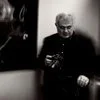
William Kentridge views drawing as a way of thinking - not merely rendering a picture. Working primarily with charcoal, his animations feature drawing, erasing, and redrawing all on the same sheet of paper. As marks build up, and are also erased back, vestiges of earlier phases of his drawings remain. His animations are a fascinating archeological record of his thoughts manifested through drawing. This stratigraphic, layered approach appeals to me of late. I’ve interviewed in previous episodes of The Artful Painter, for example, Sean Michael Chavez and most recently, Brad Teare. Both leave a crumb trail of evidence of previous generations of a painting peaking through subsequent built-up layers of paint. Kentridge does this so effectively with his drawings and animations.
The animations add an extra dimension because it is a record of his thoughts including initial mark-making, erasure, correction, hesitation, and exploration. The book Six Drawing Lessons attempt to capture that process. The series is based on his 2012 Charles Eliot Norton Lectures at Harvard. You can watch the videos below of each lecture. The book, based on these lectures. is not a tutorial on drawing. Rather, it is a series of thoughtful essays. One of Kentridge's central ideas is that drawing is a form of knowledge. Rather than beginning with a fully formed concept and using drawing to illustrate it, he argues that drawing is how ideas come into existence. The hand often discovers something before the conscious mind understands it. This reverses the traditional hierarchy where thinking precedes making.
He often describes the studio as a place where thinking is physical rather than purely intellectual. The charcoal, eraser, paper, and accumulated marks become collaborators in the creative process. Another recurring theme in his work is productive uncertainty. Kentridge distrusts certainty. I suppose quantum mechanics does, too. Anyhow, he believes great art emerges from ambiguity rather than fixed conclusions. Erasures, mistakes, accidents, and revisions aren't failures—they're evidence that genuine thinking is occurring. In other words, unexpected events can become the source of invention if the artist is receptive.
In my conversations with many artists over the years, I’ve often been told, “Enjoy the process!” That appears to be Kentridge’s take, too. While the painting itself is the end-product, it’s the process to get there that is the real joy. Drawing is not the record of an idea already formed; drawing is the mechanism through which ideas become possible. That may be the most enduring contribution of Six Drawing Lessons. It reframes drawing from a technical skill into a mode of inquiry—a way of thinking in charcoal.
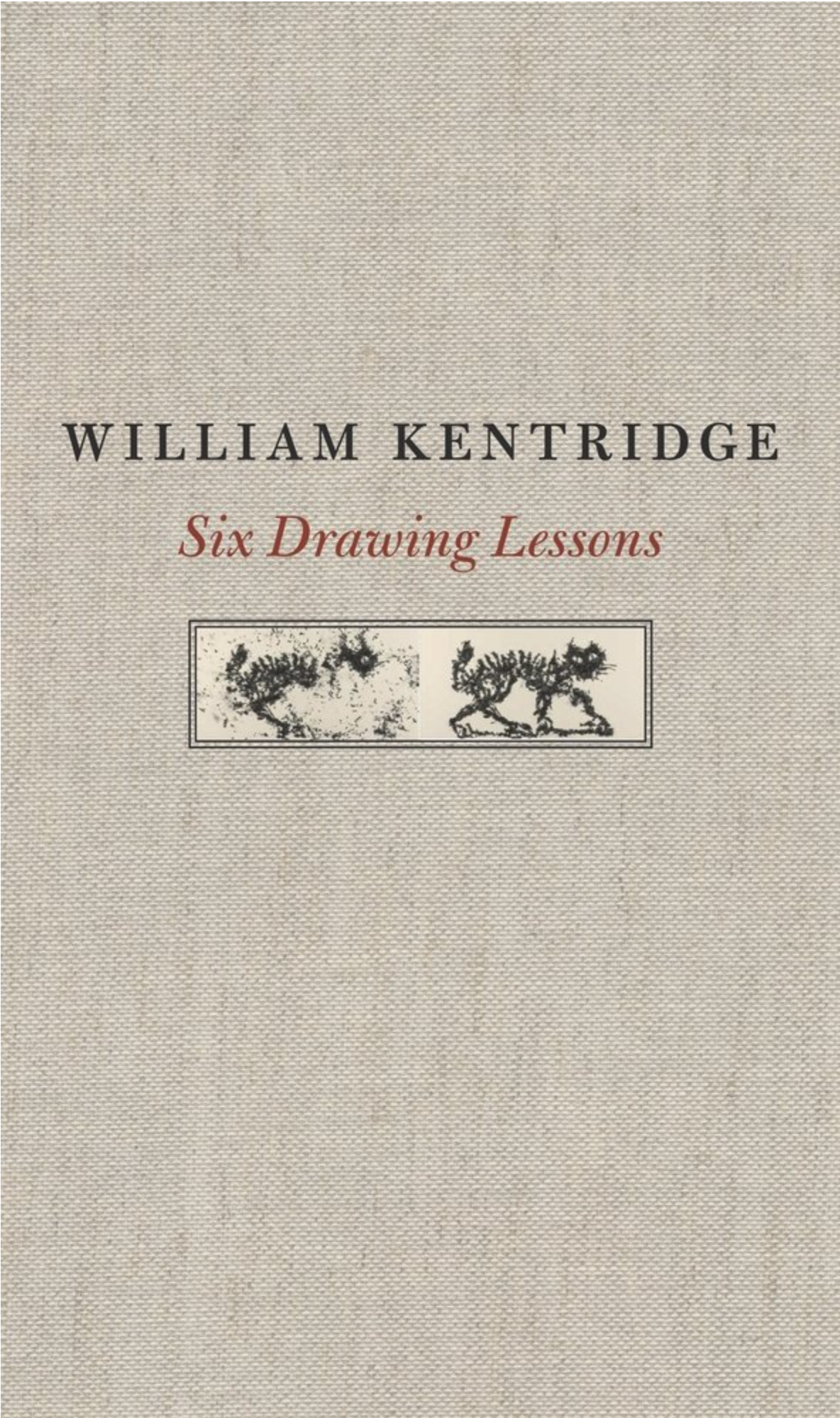
Six Drawing Lessons (The Charles Eliot Norton Lectures), by William Kentridge (affiliate link)