Author: James Gurney

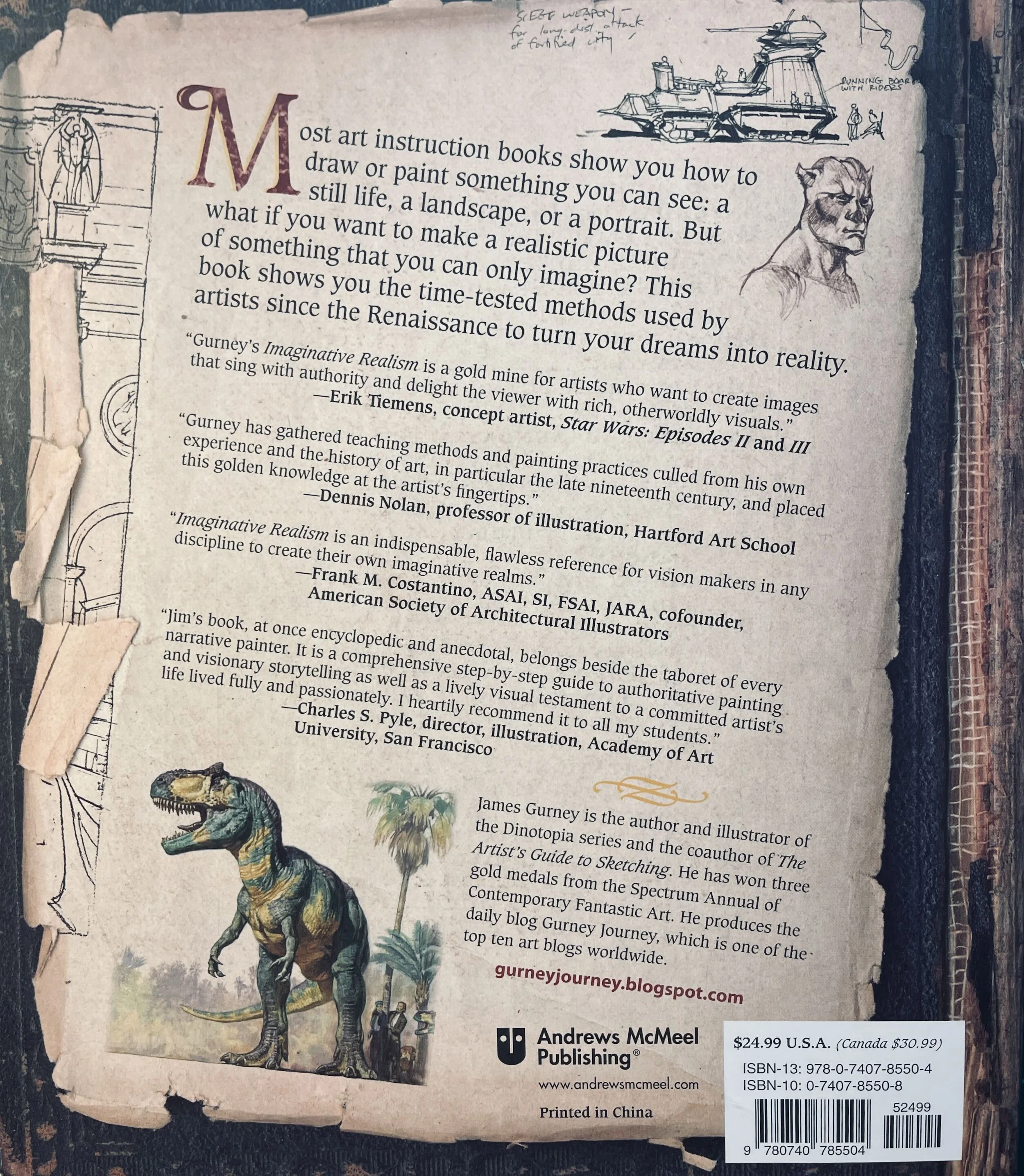
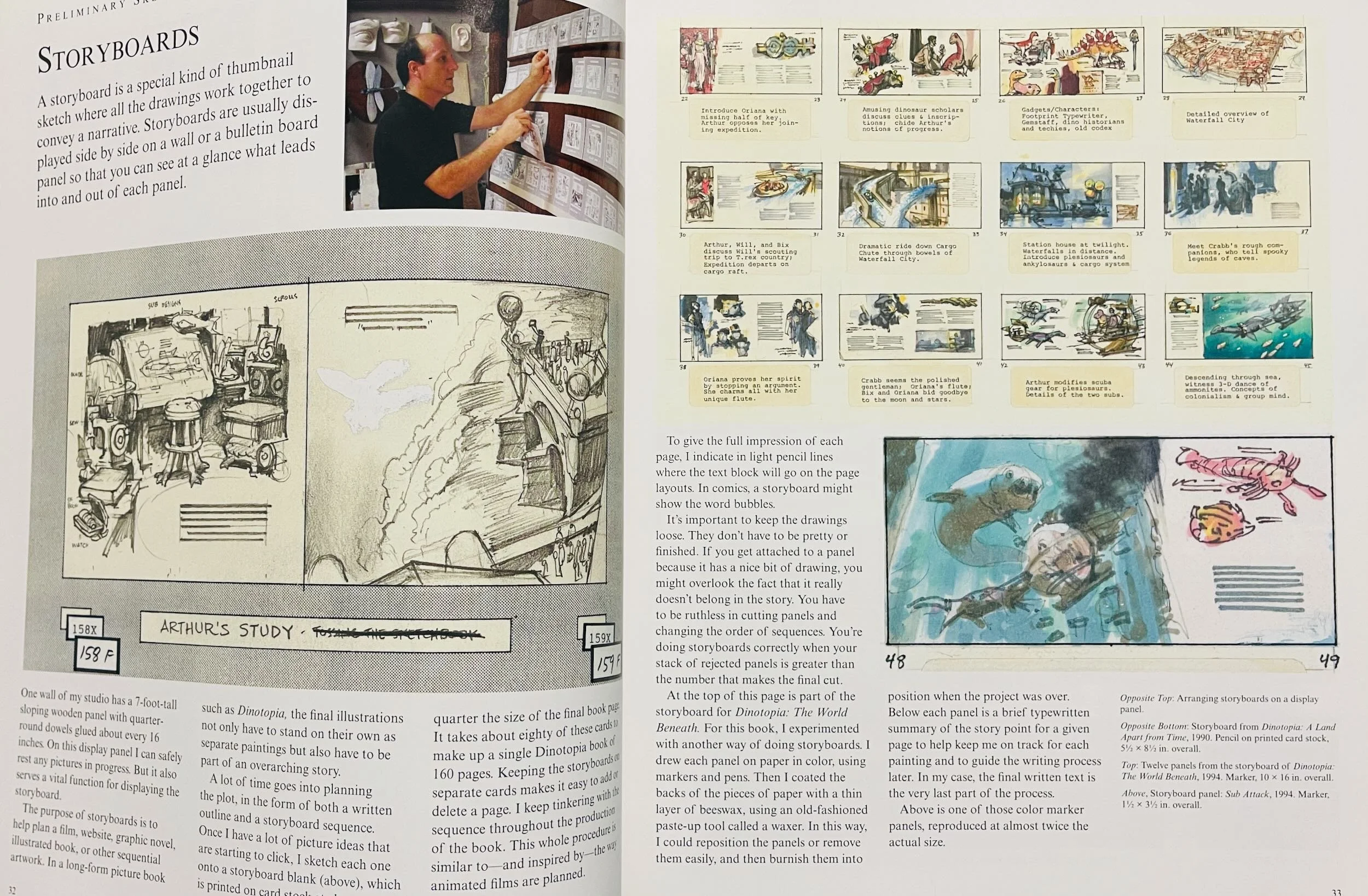
I love this book! Why? So much has been said about painting from life. Representational painting from life has become a dogma of sorts. As a child, I drew because I wanted to invent worlds and things. Improbable planets and futuristic spaceships were the substance of my imaginative mind. I wanted to bring those creations to life. All I had was a pencil and paper. The idea of drawing from life did not come to my young mind. Fast forward to adulthood (whatever that is other than getting old), I remember seeing Bob Ross on television for the first time. He painted landscapes. Fantastical landscapes, at that. Perhaps they were inspired by places Ross had been to and seen (Alaska, for example). However, as he painted, he made it up as he went along – embracing “happy accidents” as part of the joy of painting. He just made it up! If an artist is a creator, it stands to reason we can just make it up, too! James Gurney’s first how-to book, Imaginative Realism – How to Paint What Doesn’t Exist (affiliate link) – is one of those rare books that delves in detail into the tools, media, and techniques that artists can use to bring their own worlds to life.
Description from the publisher:
“From the award-winning artist, learn to see and shape the world in a way you never before imagined.
”An award-winning fantasy artist and the creator of Dinotopia, James Gurney instructs and inspires in Imaginative Realism: How to Paint What Doesn't Exist (affiliate link). Renowned for his uncanny ability to incorporate amazing detail and imagination into stunningly realistic fantasy settings, James Gurney teaches budding artists and fans of fantasy art step-by-step the techniques that won him worldwide critical acclaim. This groundbreaking work examines the practical methods for creating believable pictures of imaginary subjects, such as dinosaurs, ancient Romans, alien creatures, and distant worlds.
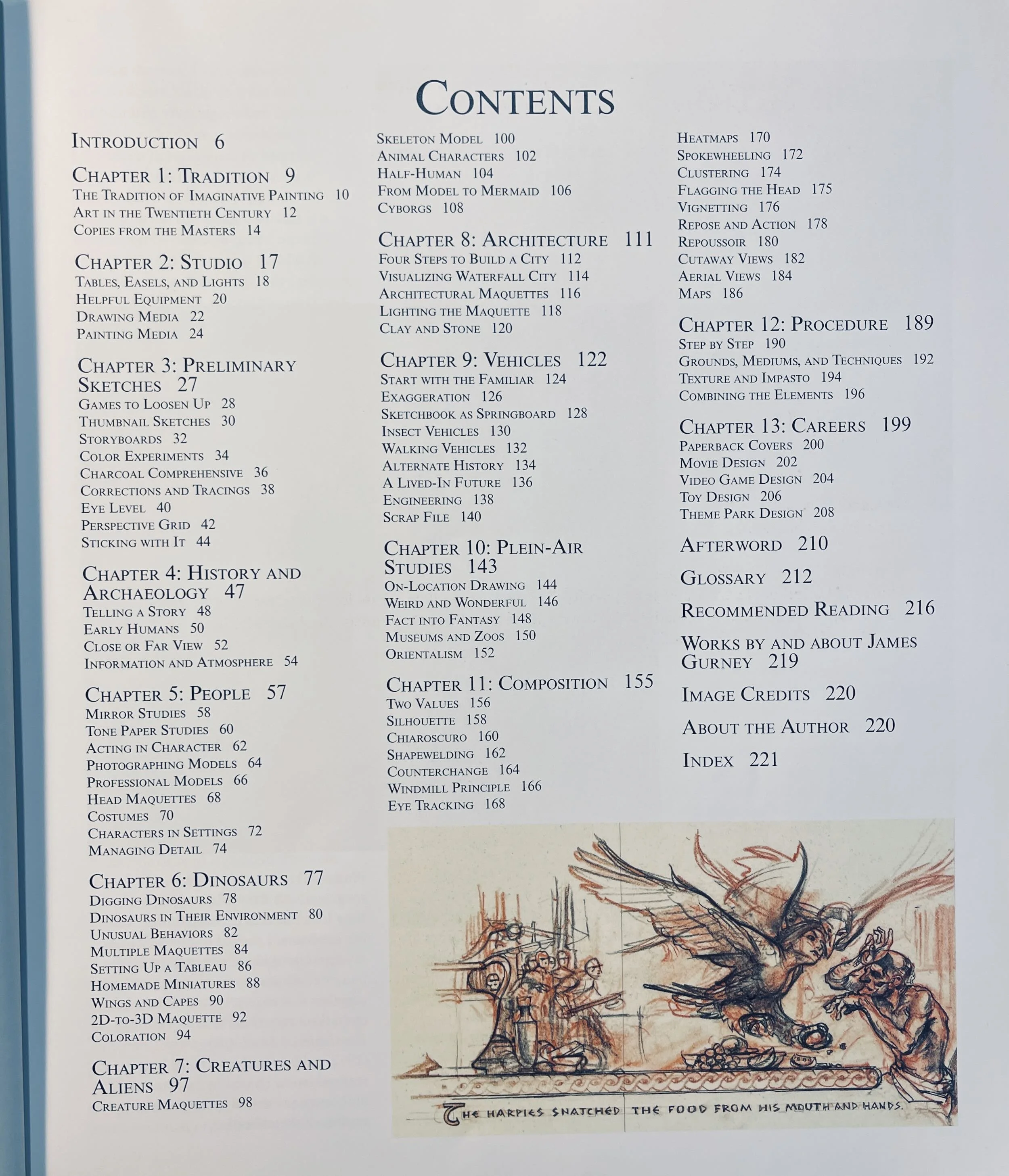
”Beginning with a survey of imaginative paintings from the Renaissance to the golden Age of American illustration, the book then goes on to explain not just techniques like sketching and composition, but also the fundamentals of believable world building including archaeology, architecture, anatomy for creatures and aliens, and fantastic engineering. It concludes with details and valuable advice on careers in fantasy illustration, including video game and film concept art and toy design.
”More than an instruction book, this is the ultimate reference for fans of science fiction and fantasy illustration.”
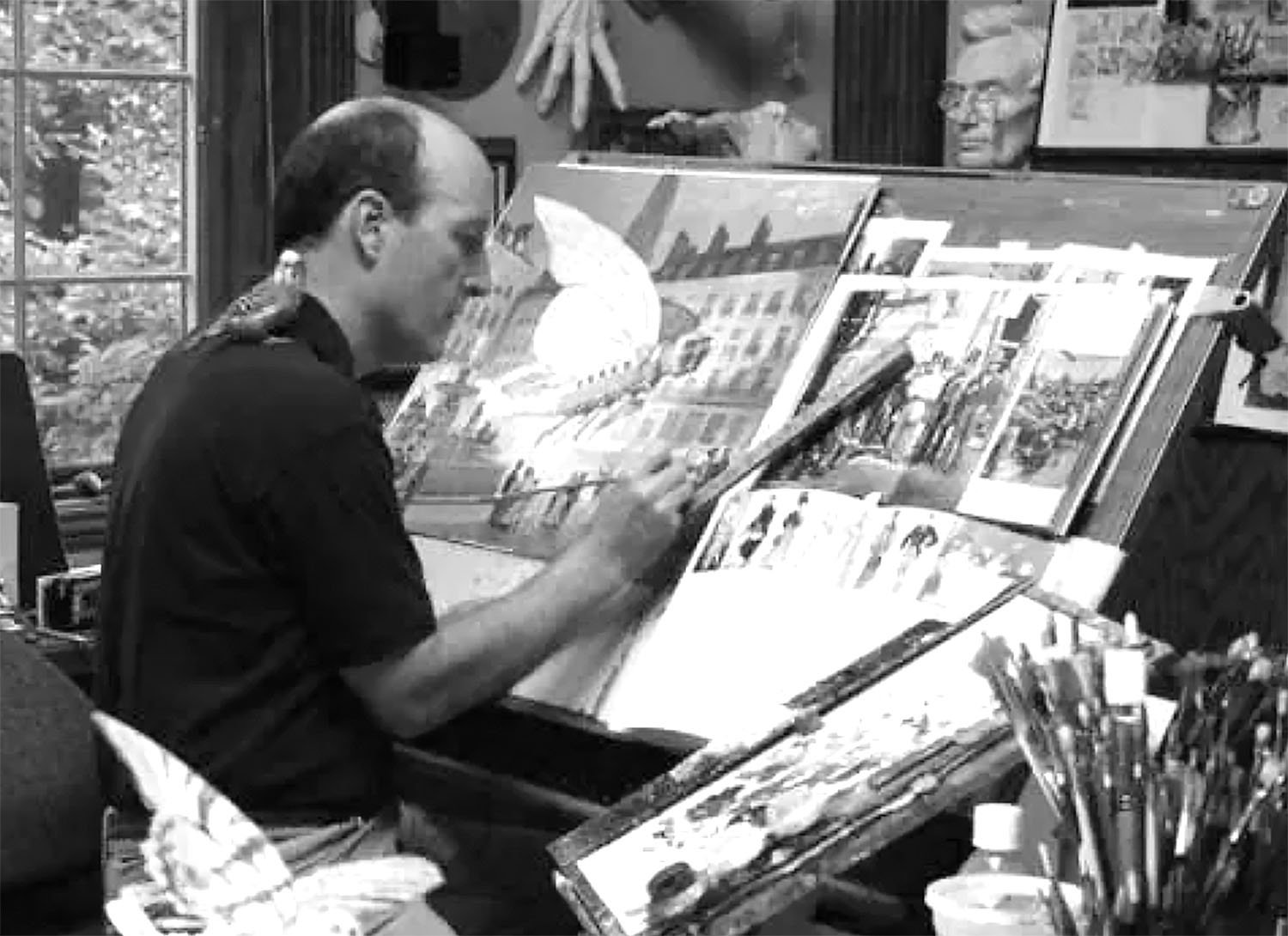
Artist, Illustrator, and Author - James Gurney