Author: Ernest W. Watson
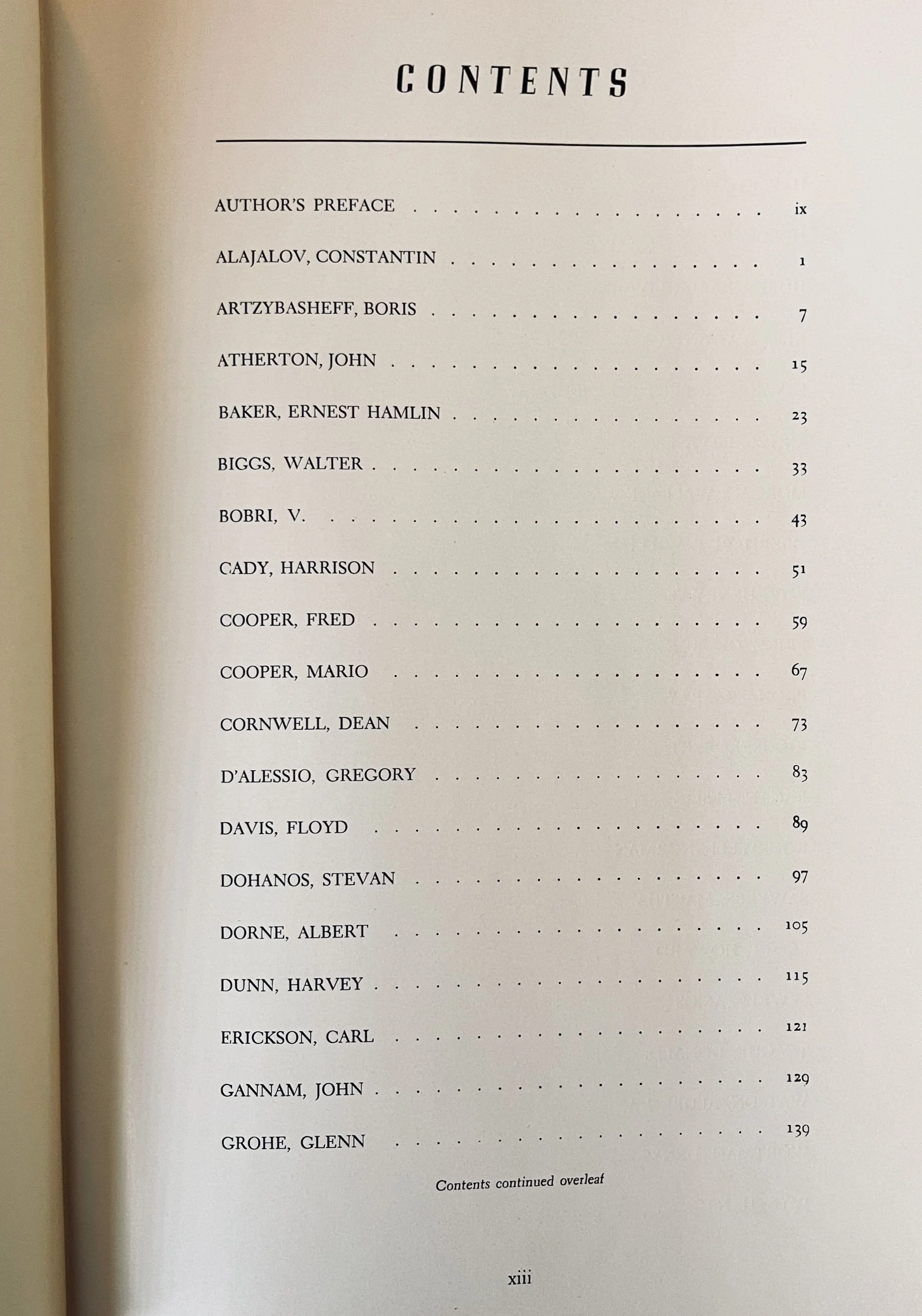
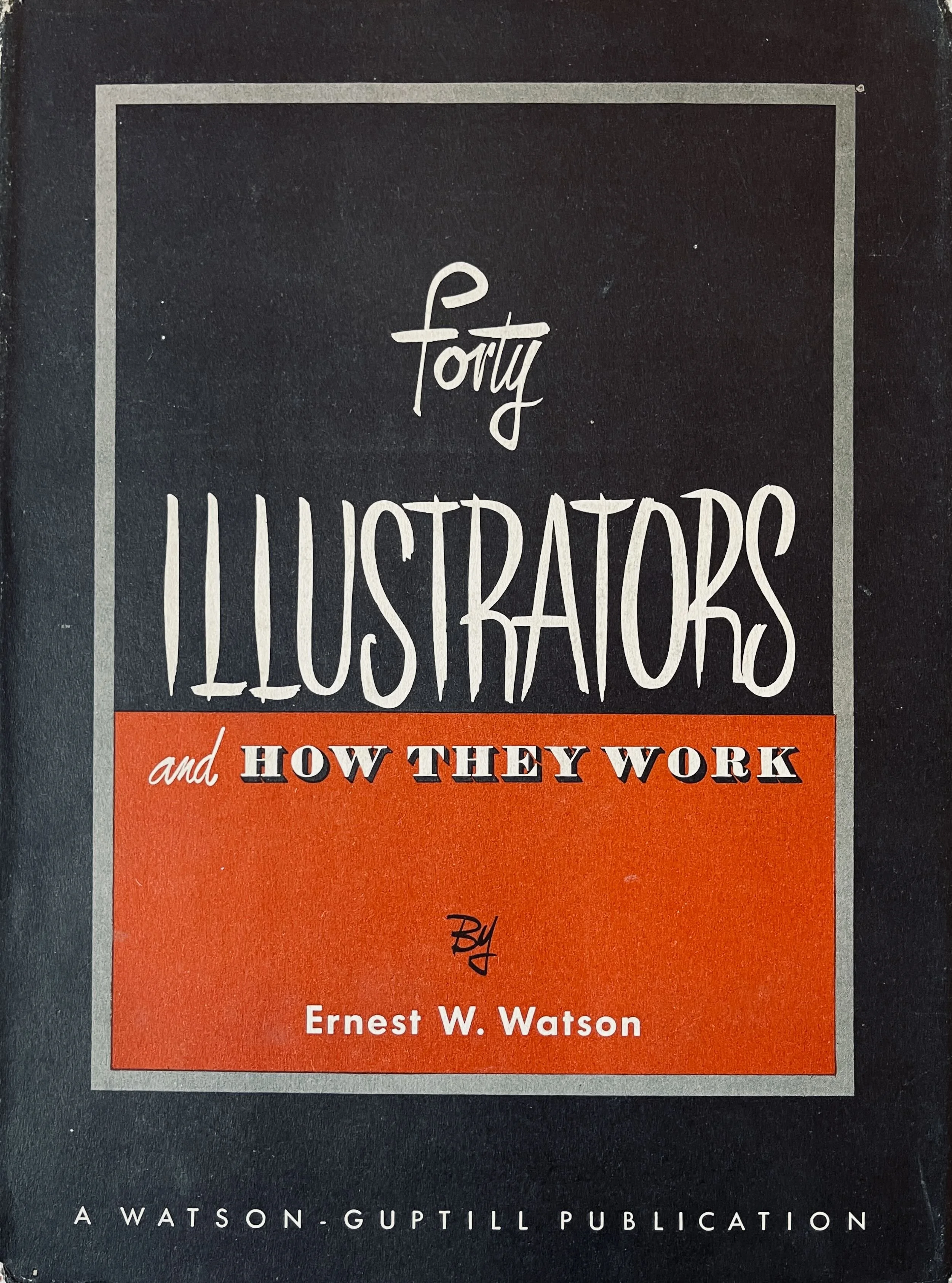
This book – Forty Illustrators and How They Work (affiliate link) – is a delightful addition to my library. I have the 1953 edition which means at the time of me writing this the book is 72 years old! The dust jacket is in good condition considering its age. What drew me into this book are the detailed articles and photos that show each illustrator at work along with samples of their work. You can see the complete table of contents below. Some of the standouts to me are Walter Biggs, Dean Cornwell, Harvey Dunn, Norman Rockwell, Martha Sawyers, Donald Teague, and N. C. Wyeth.
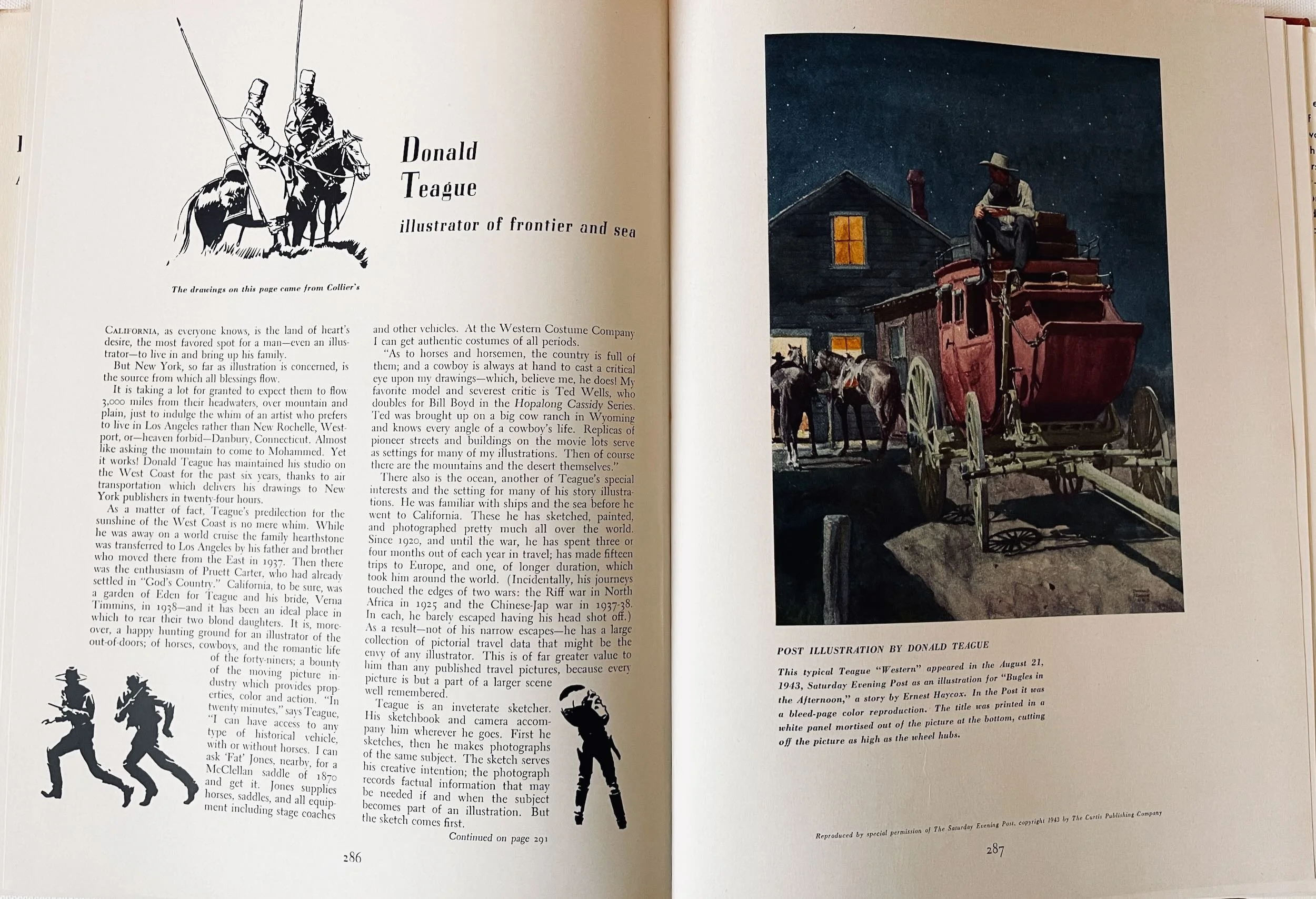
In conversations with artists that I’ve had the privilege to converse with, a name that came up a few times was that of illustrator Donald Teague. In the chapter, Donald Teague – Illustrator of Frontier and Sea – it was interesting to see that he was open to using modern tools to help him get the job done. On page 288 there is a photo of Teague using a projector to trace out on illustration board a photo of one his smaller sketches. He was quite comfortable using photographs to augment his work.

Donald Teague using a projector to enlarge one of his sketches onto an illustration board.
Teague was an incredibly accomplished draughtsman. Also, he enjoyed the reputation of being a fine art painter. Teague bucked the trend of illustrators living in New York. Instead, he was quite happy living in California. In his own words, he said, “In twenty minutes I can have access to any type of historical vehicle, with or without horses. I can ask ‘Fat’ Jones nearby, for a McClellan saddle of 1870 and get it.” So there! Try that in New York! Teague continues, “As to horses and horsemen, the country [Western California] is full of them; and a cowboy is always at hand to cast a critical eye upon my drawings–which, believe me, he does!”
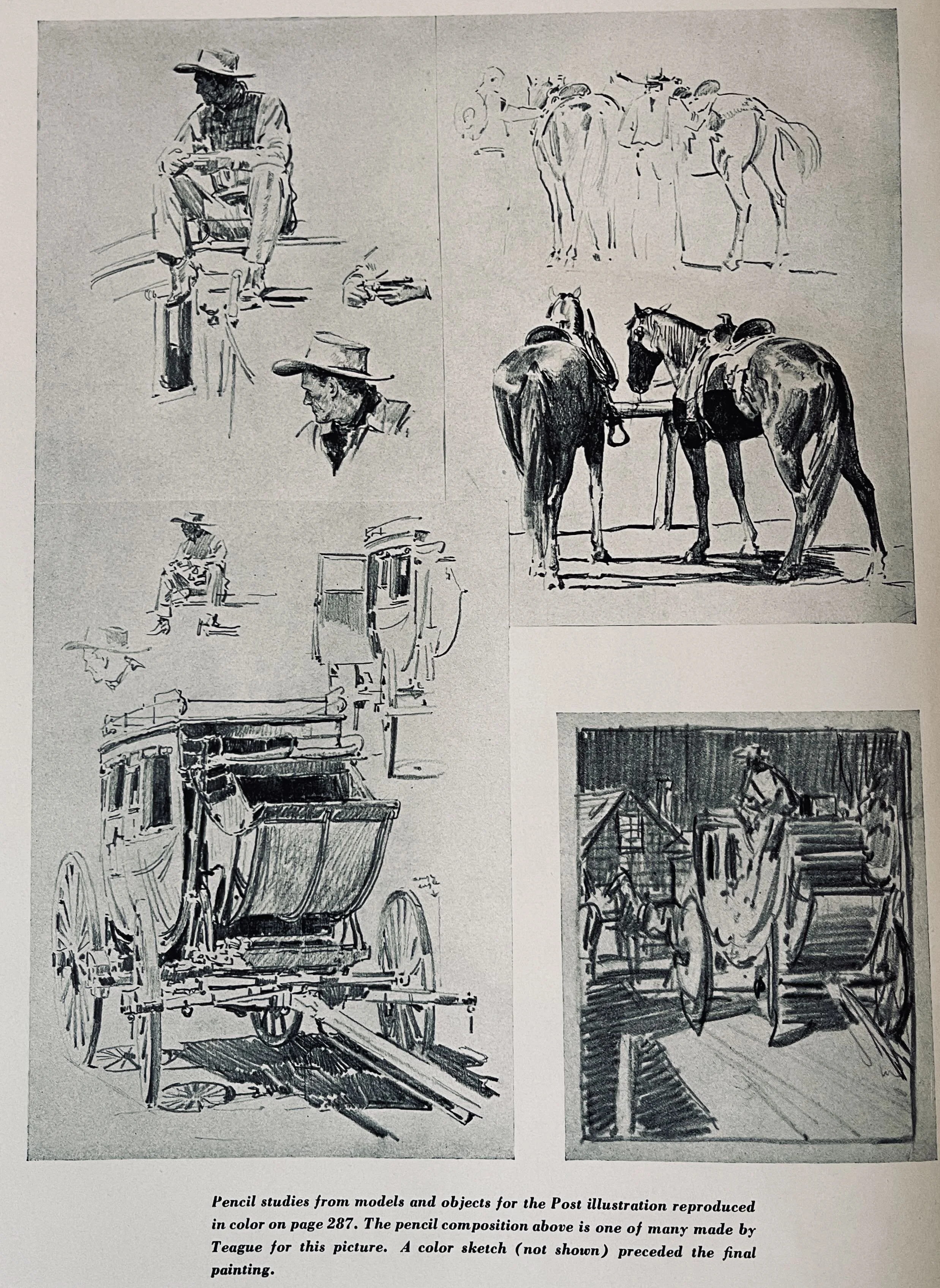
This article about Teague states he was an “inveterate sketcher. His sketchbook and camera accompany him wherever he goes. First he sketches, then he makes photographs of the same subject. The sketch serves his creative intention; the photograph records factual information that may be needed if and when the subject becomes part of an illustration. But the sketch comes first.” That’s the way I work, too, so it’s great hearing that approach validated by Donald Teague.
Those are just a few juicy tidbits from this book. It’s been out of print for many years, but thankfully affordable copies can still be found. I highly recommend adding it to your library.
Excerpt from the Preface:
"The approach to the study of each artist has differed with the subject. Some chapters focus upon purely technical practices; others emphasize training and experience; still others present a single important phase of the artists' work. Viewed as a whole, this book endeavors to give a comprehensive pictures of contemporary illustration in its various ramifications..." "Illustration is the goal of a great majority of students in our art schools. Its allurements are many. Not least of them is the fabulous income that awaits the winner of a top place in a very lucrative profession. Even those who do not reach the highest peak know that there are good incomes for thousands on the lower levels. What is not sufficiently appreciated is that the gold in illustration, like the ore in the depths of the earth, is not so easily brought to light. If the stores of the illustrators in this book demonstrate the extent of training, industry and fanatical devotion that lies hidden behind their facile art on the printed page, I shall feel that one very useful purpose has been served in their publication."