Author: John F. Carlson

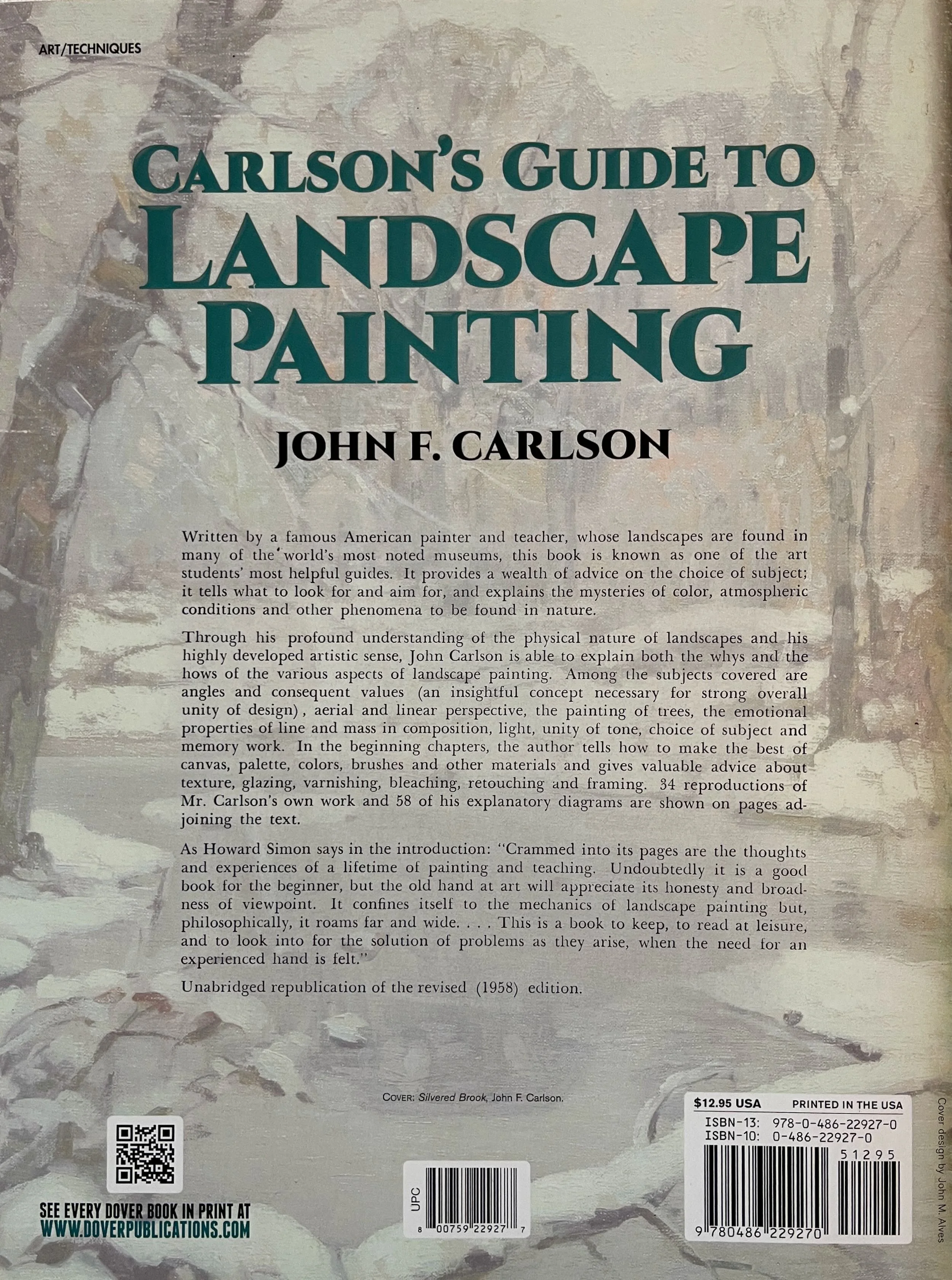
Of all the book recommendations I’ve heard, John F. Carlson’s book – Carlson’s Guide to Landscape Painting (affiliate link) – is the one I hear recommended most often. If you can find one of the original editions of this book at an affordable price that would be wonderful to add to your library. However, this Dover edition is an economical and worthwhile buy. The print quality is clear and the photos – well, it’s a cheap Dover edition so what can I say? It does the job at a decent price.
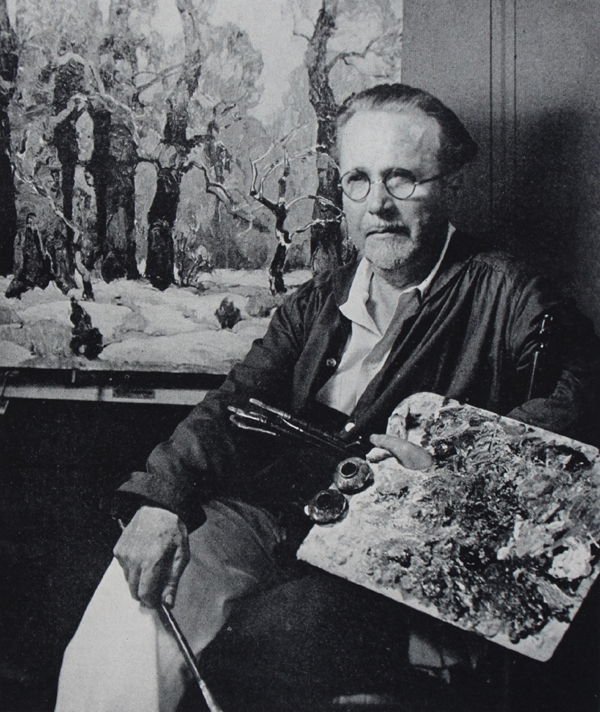
John F. Carlson, 1942, From American Artist, December 1942, Unknown Photographer
“Too much reality in a picture is always a disappointment to the imaginative soul. We love suggestion and not hard fact.”
Sterling Publishing put out earlier versions of the book back in the early 1950s. They made two versions: one with a colorful dust jacket and the other with the color cover printed right on the book. And here’s something cool: at least one of Carlson’s paintings is reproduced in color in these Sterling editions.

Sterling Edition with Dust Jacket
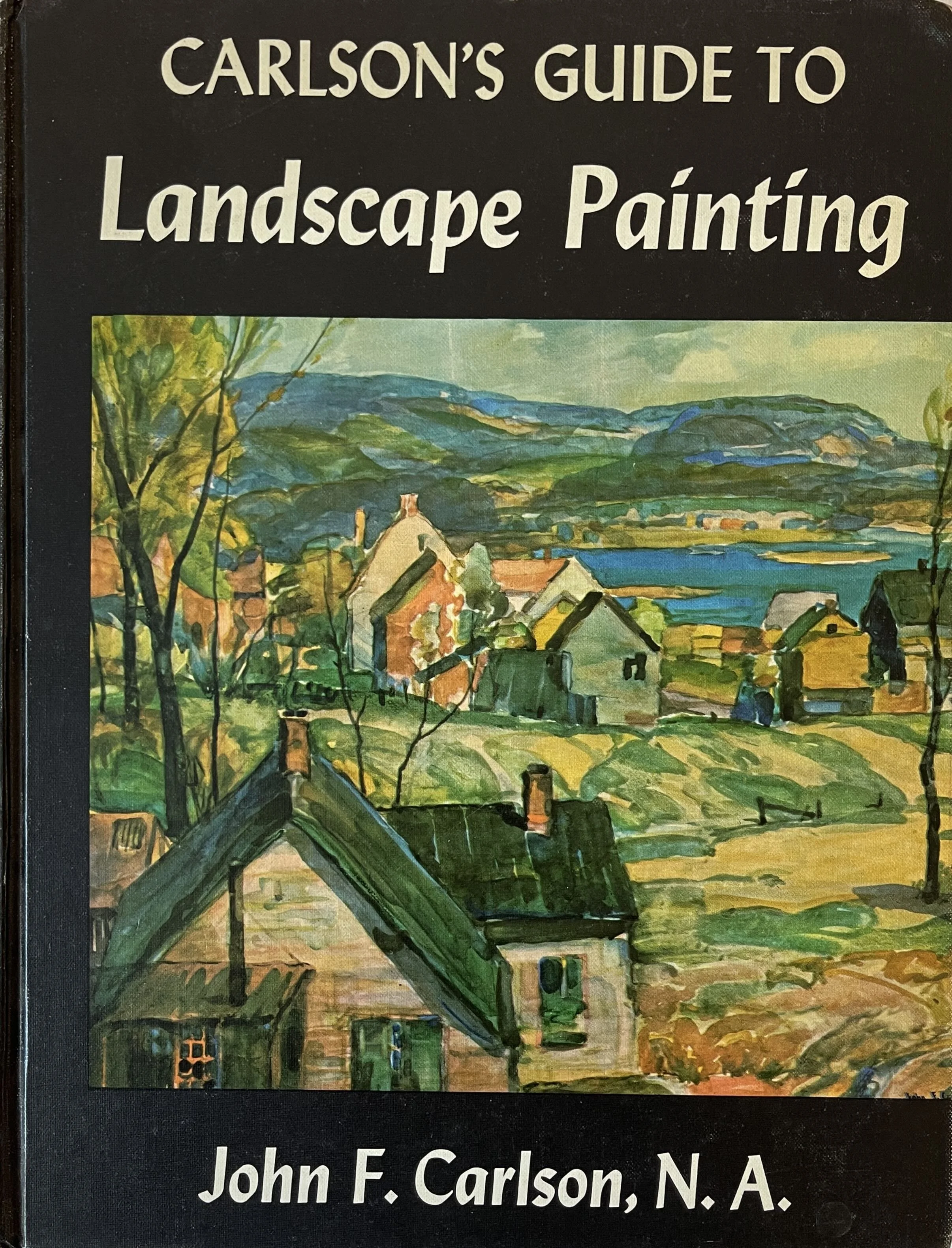
Sterling Edition with printed book cover.
In 1928, the National Publishing Society released Carlson’s Elementary Principles of Landscape Painting (affiliate link). From a historical perspective, this volume is quite fascinating. It essentially laid the groundwork for what would later be known as Carlson’s Guide to Landscape Painting (affiliate link). Many would argue that the later edition is the better book for artists, as it benefits from superior editing, leading to a more logical and concise discussion on landscape painting. However, precisely because it is less heavily edited, Elementary Principles provides an intriguing look into Carlson’s philosophy and thoughts on art. A few years ago, I was fortunate enough to find an affordable copy of Elementary Principles, inscribed by Carlson himself. He gifted the copy I now own to a family member, relative, or friend as a Christmas present. I don’t know what happened to the ownership of this book over the years (nearly 100 years at that), but I’m grateful to have this priceless volume in my collection. Some used copies of Elementary Principles are ridiculously priced! If you shop around, though, you will find an occasional copy for less than $100.

Elementary Principles of Landscape Painting by John F. Carlson, published in 1928. This book would later be heavily edited and reformated to become Carlson’s Guide to Landscape Painting which landscape artists cherish today.


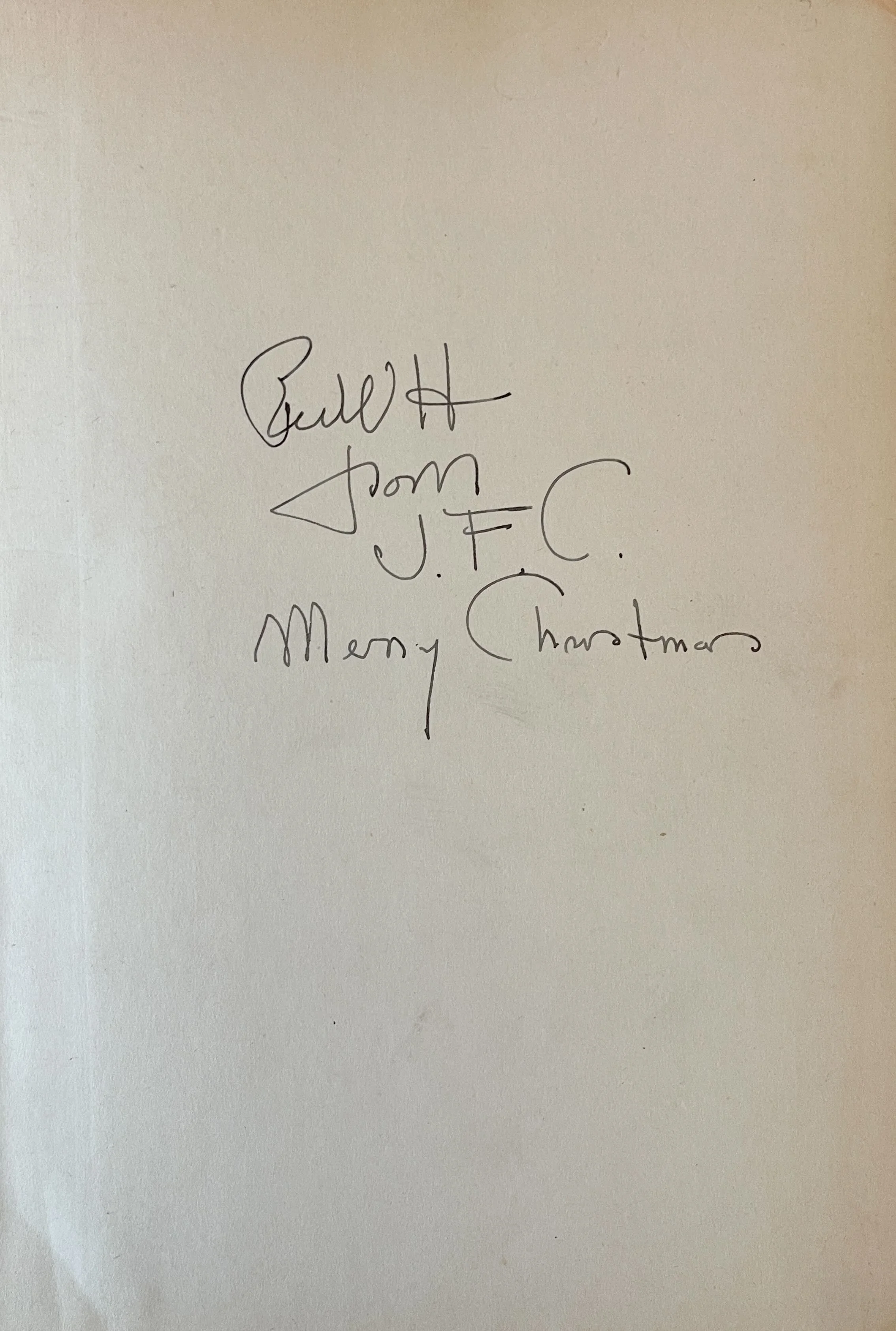
Inscribed with John F. Carlson’s initials to a friend or relative named Rudd H. (which is a Swedish name and fitting since Carlson was Swedish, too.)
The description on the back of the Dover edition of Carlson’s Guide to Landscape Painting reads:
“Written by a famous American painter and teacher, whose landscapes are found in many of the world's most noted museums, this book is known as one of the art student's most helpful guides. It provides a wealth of advice on the choice of subject; it tells what to look for and aim for, and explains the mysteries of color, atmospheric conditions, and other phenomena to be found in nature.
“Through his profound understanding of the physical nature of landscapes and his highly developed artistic sense, John Carlson is able to explain both the whys and the hows of the various aspects of landscape painting. Among the subjects covered are angles and consequent values (an insightful concept necessary for strong overall unity of design), aerial and linear perspective, the painting of trees, the emotional properties of line and mass in composition, light, unity of tone, choice of subject, and memory work. In the beginning chapters, the author tells how to make the best of canvas, palette, colors, brushes, and other materials and gives valuable advice about texture, glazing, varnishing, bleaching, retouching, and framing. Thirty-four reproductions of Mr. Carlson's own work and 58 of his explanatory diagrams are shown on pages adjoining the text.
“As Howard Simon says in the introduction: "Crammed into its pages are the thoughts and experiences of a lifetime of painting and teaching. Undoubtedly it is a good book for the beginner, but the old hand at art will appreciate its honesty and broadness of viewpoint. It confines itself to the mechanics of landscape painting but, philosophically, it roams far and wide. . . . This is a book to keep, to read at leisure, and to look into for the solution of problems as they arise, when the need for an experienced hand is felt."